

By Hernán B. Aliaga
Our inhouse philosopher returns with a commentary on an article published in 1982 by one of the most prominent thinkers of the Global South, Amartya Sen. In it Sen argues that standard economic models view human beings as homo economicus– a narrow rational that maximises self-interest and makes a person who follows that rigid and limited framework “a bit of a fool”
Have you ever wondered why someone would enter a burning house to save others, return a bag full of money, or donate blood to a stranger?
If human beings were what a certain branch of economics assumes them to be — agents who always act in pursuit of their own self-interest — these behaviours would be difficult to explain.
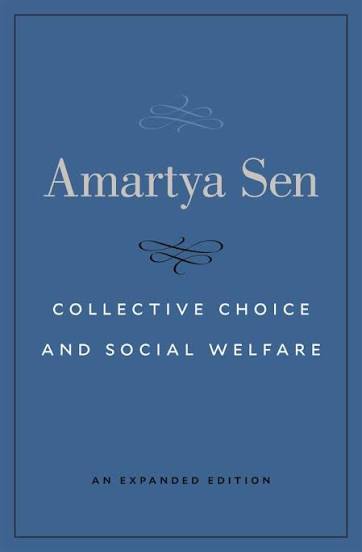
One of the most influential texts to challenge this view is Rational Fools (1977), by Amartya Sen. In it, he criticises the central character of standard economic theory: the individual who acts by maximising their own self-interest, guided by a stable set of preferences. He provocatively calls this model the “rational fool”.
Why “fool” if he is rational? The paradox is intentional. This agent is perfectly rational in a formal sense: his choices are coherent, consistent and calculated. And yet he is a fool because this coherent calculation blinds him to fundamental dimensions of the world and of human behaviour.
Rational choice theory holds that we act according to what we prefer: we choose what benefits us most or gives us the greatest satisfaction. Even when we help others, it could be argued that we do so because it makes us feel good. Ultimately, everything comes down to personal benefit.
Sen does not deny that this approach has value. It is useful for explaining consumer decisions or behaviour in markets. But it cannot explain human behaviour in general. The key point lies in a distinction that standard economic theory overlooks: acting according to what one prefers and acting according to what one considers right. Sen then introduces the key concept of commitment.
He distinguishes it from sympathy (or empathy, for some): this is when I feel saddened by seeing someone suffer and act to alleviate that suffering, while remaining, in a sense, selfish — I act to improve my own emotional state; the other person becomes an input, an ingredient of my own well-being.
But commitment is something else: acting even against one’s own preferences or interests because one considers it to be the right thing to do. When someone tells the truth even though it harms them, keeps an expensive promise, or acts out of a sense of duty, they are not maximising their own benefit. They are being guided by something that cannot be captured by any calculation.
This has important consequences. If we reduce all rationality to utility maximisation, behaviours such as honesty, cooperation, respect for social norms, or concern for the common good appear as anomalies… when in reality they are fundamental conditions of living together.
Sen therefore proposes broadening the concept of rationality. To be rational is not merely to choose efficient means to achieve given ends, but also to be able to reflect on those ends and, when necessary, subordinate them to principles that one considers more important.
Sen’s criticism is not merely theoretical; it points to a concrete risk: when we adopt a reduced view of rationality, we do not merely misrepresent people.
We also begin to see ourselves in those terms.
And so the person who enters the burning house, returns the bag, or donates blood without expecting anything in return — that person is no longer the norm but the exception. An anomaly. A failure. A fool.
When in fact, it is exactly the opposite.
Hernán B. Aliaga is a writer and a social philosopher. He is a former lecturer at Pontificia Universidad Católica, Peru. He has been educated between Lima and Berlin where he now lives and is working on his doctoral thesis on social theory. He is an active commentator on social media. This is the first of a series of articles on social philosophy for Perro Negro in English. Most have already posted in Spanish in his Instagram page. You can also follow him on https://hernanbaliaga.substack.com/ and TikTok
Main image: Professor Amartya Sen, courtesy of The British Academy

Other Articles

Un sampleo sobre Rusia
¿Cómo escribir una historia?




No Comment! Be the first one.