

By Professor Jason Wilson
Borges as a poet and as a story teller are two very different entities. Here, one of the most renowned British Hispanists tells how his poetic ouvré increased towards the end of his life. His late poetics fluctuated intimately between unhappiness and a longing for oblivion and physical courage before returning to that archetype made of common things
‘The world is a perennial motion, everything in it moves without cease: the earth, the rocks of the Caucasus, the pyramids of Egypt … I do not portray being; I portray passing’. Montaigne.
Eminent Hispanist Donald L. Shaw remarked that ‘after the 1950s Borges exists as a poet in a kind of splendid isolation’. Guillermo Sucre deemed him marginal. Pablo Neruda told Roberto Alifano, after reading Borges’s La rosa profunda, that he should be rescued as a poet. Developing these insights about his position in mid twentieth century writing, I would add that Borges’ late poetry is mainly read because it is by Borges and often self-referentially about Borges, thus seducing readers into searching for clues to the man. He projects such a complex literary persona in his fictions that his later poems, often grafted on a notion of sincerity, allow a critical reader immediate understanding. By the 1970s, he was no longer at the forefront of taste or innovation. Few younger poets read him as an act of discovery or to commune with a master. At the same time, he mainly re-read his favourites, remembered, often English, Anglo-Saxon or Nordic poets, and cared little for contemporary writing. He told Willis Barnstone: ‘I’m a nineteenth century writer … I don’t think of myself as a contemporary of surrealism…’
When the urge to write came, he would dictate. He often defined the poem as involuntary. He would create its lines in his head and then recite them, his craft and metrics ensuring their survival in this slow process imposed on him by blindness.
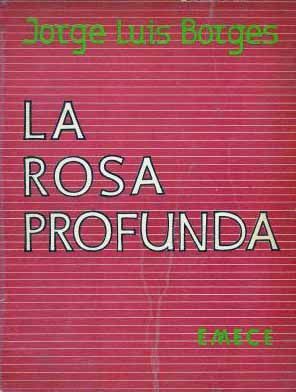
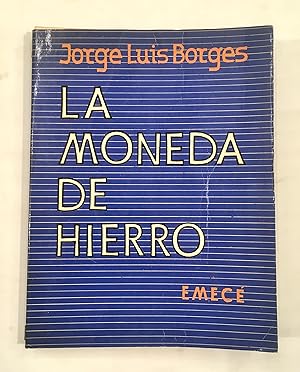
A consequence of letting a poem ‘happen’ is that the six late collections collect whatever was written, without an underlying order. It is hard to guess whether the order of the poems follows chronology. When he reached a certain amount, his publisher published them. Formally little changes over these last six books. Between La rosa profunda, 1975, through La moneda de hierro, 1976 to Historia de la noche, 1977, La cifra, 1981, Atlas, 1984, and Los conjurados, 1985 (he died in 1986) we have a homogeneous series of poems or musical variations composed by a poet over 70 years old. He called them miscellaneous books and sometimes carried over poems from one collection to another to fill out the book. His last years were prolific in comparison to the years between 1930 and 1958 where he penned only 21 new poems.
However, as Borges often asserted, a poem belongs equally to a reader. In a lecture he noted that when we read a good poem we think that we too could have written it, an insight intrinsic to the Borgesian revolution. Yet, he resonates in his readers not only because he is Borges, but because he writes in a lyrical way, close to his own voice (which twice in poems he asserts disliking). In his later thinking about poetry he suspected that intonation, the poet’s voice, were essential not metaphors. He long opposed baroque attitudes, which put formal structures that generated surprise above expressing feeling. His voice speaks quietly and quirkily to us, his ‘tacit friends’. Jaime Alazraki evoked a ‘music unheard before: an austere, poised, dignified, and quiet music’. A source of voice is Montaigne, chosen in a poem A Francia as one of his masters (with Verlaine) and ‘inventor de la intimidad [inventor of intimacy]’. In his note to the reader of 1580, in John Florio’s translation, Montaigne is explicit that ‘I desire therein to be delineated in mine own, genuine, simple and ordinary fashion, without contention, art or study; for it is myself I portray’. Later in his long essay on the education of children, from his perspective of old age, he attacks pedantry in the name of the complete gentleman who should develop quick cunning arguments and witty sayings so that he may even be a ‘good poet, but an illversifier’. Montaigne shuns words and artifice in their own right, as does Borges. Subject matter matters, not the words that evoke it. Montaigne’s style ‘is a natural, simple, and unaffected speech… so written as it is spoken’. Close to Borges, he picks out valour ‘not pedantical, nor friar-like, nor lawyer-like, but rather downright, soldier-like’. Here then, Borges – manly, soldier values – reads Montaigne and defines an old man’s poetics. A constant device evoking voice is the dramatic monologue where, following Browning, Borges impersonates another’s voice as the poem. Behind all his later verse, as Jaime Alazraki has clearly shown, is a will to be intimate that undermines his more ‘impersonal’ earlier poems. Alazraki listed facile confession, Romantic intimacy and existential egocentrism as what Borges had avoided.
In his late books Borges continued exploring the paradox of time, but less analytically, more with what I call the emotion of time. Most critics agree that Borges’ obsessive allusions to Heraclitus’ aphorism about time and the river best captures this inexorable rushing of time. But not as a concept. Old age forced a new emotion on to this awareness of flux, that time is running out, that nothing stops time’s flow. He made this succinct epigram his own; almost as if he invented it so well does it convey a lifetime of pondering the mystery and anguish of time. Yet, contrary to this sense of relentless time, the poem, echoing a vast poetic tradition (Homer, Dante, Milton, Browning, Verlaine, Yeats, Frost etc), seems to halt time’s torrent, the experiential source of his tentative idealism and his memorable story El milagro secreto. At the least, this truce happens during the act of reading. So, fugitive time, the act of reading, a living tradition, the poem and art in general become pressing topics that spread beyond a restricted literary life. Another cluster of topics emanates from blindness and ageing as curse and blessing, involving the life and solitude, but also the reader, to reflect Wordsworth’s ‘growth of a poet’s mind’ (subtitle to his Prelude). A third cluster of themes, dear to Borges, is the emotional resonance of place, valour and patria. I will glance at a constant in all his work, the journey towards identity. Finally, surprisingly, late love lyrics emerge in Historia de la noche, 1977.
But we begin with diction and voice. Juan José Saer broke down the famous Borgesian style to five components: “a colloquial tone, fixed lexical components, abrupt contrasts, his use of adjectives and, memorably phrased, ‘incorrigible enumerative tendencies”. These elements do not separate prose from poetry. In fact, countless poets have been indebted to the prose. Argentine poet Alberto Girri confessed that Borges’ epigrammatic concision and strict syntax seemed unattainable: ‘For that reason, to read Borges’ prose was absolutely decisive for me’. Girri does not mention the debt to English syntax, which could account for that sense of difference in his sentences, whether in prose or poetry. In the epilogue to El hacedor, 1960, Borges notoriously confessed that nothing much had happened in his life except reading Schopenhauer and ‘the verbal music of England’. So essential is this English music that a perceptive critic, Howard Young, stated that his ‘tone is English’ and suggested that Thomas Gray’s churchyard elegy [Elegy Written in a Country Church-Yard, 1751] shares an equivalent tone. Borges himself in the prologue to La rosa profunda claimed that compositionally he could not predict if a poem or a story would emerge after fixing the opening and closing lines . Indeed, in the wake of El hacedor, prose and poems are intermingled in all the late collections, so Saer’s stylistic categories equally apply to poems.
Blindness and ageing
Though Lear might complain of being over 80 years old, a ‘very foolish fond old man’, Shakespeare himself was only around 41 years old when he wrote the play. Old man’s poetry was defined by W. B. Yeats in his A Prayer for Old Age where ‘a wise old man’ and a ‘foolish, passionate man’ saw decrepitude as wisdom and youth as passion and ignorance. In a lovely poem, An Acre of Grass, he, ‘at life’s end’, seeks ‘an old man’s frenzy’ and echoes Timon, Lear and Blake with his ‘old man’s eagle mind’. The term the ‘elders’, images of bearded Merlins, gurus, Biblical prophets and old wise men (a Jungian archetype) haunt our culture. We look towards the old as fountains of insight. There is a peculiar freedom in old age when, in the magnificent poem Elogio de la sombra, the poet defines it as a kind of ‘dicha [bliss]’ for ‘el animal ha muerto o casi ha muerto [the animal has died or almost died]’. The poet can now face death beyond sexuality, fashion and ambition. How Borges’ old man’s poetry copes with this pressure to be ‘wise’ and ‘free’ will now be outlined. But to age, we must add blindness as biographic and literary experiences, especially appealing to Milton within the poems. Tiresias, old blind man, is exploited by Tennyson in his Tiresias, 1885, where the blinded man speaks ‘the truth that no man may believe’ and by T. S. Eliot in The Waste Land, where the model of how to perceive, beyond gender differences is an ‘old man with wrinkled female breasts’. When Lear tells Gloucester plainly to ‘see [how] this world goes with no eyes. Look with thine ears,’ there is a hint at an ‘eyeless’ understanding that matches Tiresias’. The opening poem of La cifra, titled Ronda evokes blindness as a ‘delicada penumbra [delicate penumbra]’ and ends, with Moorish echoes, with sensitive lines about the increased blindman’s senses of smelling and hearing: ‘un ocio de jazmín / y un tenue rumor de agua, que conjuraba / memorias de desiertos’ [leisure of jasmine / and a gentle rumour of water that conjured up / memories of deserts].
“In his late books Borges continued exploring the paradox of time, but less analytically, more with what I call the emotion of time.”
The poet offers experiential wisdom from the tower of age and blindness. Nearly every poem concludes with some perception about place or identity or art. The last line of La rosa profunda, ‘mis ojos muertos [my dead eyes]’, plays on imminent death and blindness (through Attar, the blind Persian). The poem Proteo, with a give-away title, ends with ‘tú, que eres uno y muchos hombres [you, who are one and are many men]’ encapsulates Borges’ unique version of identity. Quite a few poems end with the word ‘nada [nothing]’, with its Buddhist extinction of personality and vanishing into literature, like the poem ‘Soy’: ‘Soy eco, olvido, nada [I am echo, oblivion, nothing]’. Borges was preparing his death. El sueño ends with the poet ‘resignado y sonriente [resigned and smiling]’, that smile of compassion for us reading mortals. Borges’ role is akin to Milton, thanks to age and blindness, who through Samson moans ‘O loss of sight, of thee I most complain! / Blind among enemies, O worse than chains, / Dungeon, or beggery, or decrepit age!’ But Milton’s Samson Agonistes concludes (through Manoa’s words) with ‘And calm of mind all passion spent’, a coming-to-turns with destiny. In his co-authored Introducción a la literatura inglesa, Milton’s ‘master piece’ is Sansón el luchador, with ‘splendid lines’, where blind Samson, surrounded by enemies, is Milton’s own mirror. This is Borges’ freedom from the body’s animal passions with the privilege of being ‘anciano [ancient]’ and ‘ciego [blind]’.
At the same time, ageing increased the poet’s wonder and refusal to pretend or boast. The prosaic and direct language of classic verse is defined in a poem as ‘el dialecto de hoy / diré a mi vez las cosas eternas [the dialect of today / I will say in my turn the eternal things]’. In the prologue to La cifra, 1981, he reveals his self-awareness as a poet whose work lacks magical cadencies, curious metaphors, long poems, fitting into a tradition of ‘intellectual’ poets led by Emerson. He insists that ‘no hay una sola hermosa palabra [there is not one beautiful word]’. This refusal to fake beauty emerges also as an avowed ignorance carried through the collections through phrases like ‘que no acabo de comprender [inexhaustible to my understanding]’ to ‘y nada sé [and I know nothing]’ and ‘juego que no entiendo [game he doesn’t understand]’ in his Montaigne simplicity mode. In the prologue to Atlas he defined life and ageing as continuous discovery ‘por la certidumbre casi total de su propia ignorancia [for the almost total certainty of its own ignorance]’ . This topos of modestia is convincing for it is there in the choice of words themselves. Even the devices are limited to obvious metres, especially the hendecasyllable, the alexandrine, the ‘proteic’ sonnet, to end rhymes, to enumeration (how Borges loves lists) and overused anaphora, Whitman’s most ‘frequent’ device. Such a verbal and rhythmical modesty lifts these poems out of fashion and history and plunges them and us readers into the now of reading outside time.
Juan José Saer broke down the famous Borgesian style to five components: “a colloquial tone, fixed lexical components, abrupt contrasts, his use of adjectives and, memorably phrased, ‘incorrigible enumerative tendencies”
But blindness also helps us respect the poet’s suffering and experiences. The poet informs us that it is a key, a freedom, a cry of self-pity. The very title of La rosa profunda peals away the appearances that sight establishes and returns us to the archetypal and universal underneath, the Dantean Rosa mística. The poet is aware of this strata to experience: ‘rosa profunda, ilimitada, íntima [endless rose, intimate, without limit]’. There are many references to blindness and patchy memory. Everything fades, even books are ‘simulacros de la memoria [shams of memory]’ and an old photo ‘ya puede ser de cualquiera [can now be of anybody]’. Indeed, Borges shrinks writers to generic names like El Marino, el griego, el persa, el sajón, el tirano, Virgil, Shakespeare and he becomes Judas or Browning, for in writing and reading there is no individuality, just tradition and associations. This prompts us to define condensation and ellipsis as crucial devices in creating trust. A reader can also expect Borges to continue to probe key words, from the tensions between the pen and the sword, to what dreams are, to nostalgic notions of ‘patria’, to mirrors, tigers, elusive identity, labyrinths, love for books and reading and always irreversible time.
Time
Søren Kierkegaard concluded Fear and Trembling by citing Heraclitus the Obscure’s fragment ‘one cannot pass twice through the same stream’, made his own by Borges. Only he adds reading to this essential maxim: ‘The text is also Heraclitus’ changing river’. In the poem Olaus Magnus, Heraclitean waters continue to drag him along. The poem titled Heráclito (he has titled previous poems thus) dramatises the flux aphorism, with his awareness ‘que él también es un río y una fuga [that he too is a river and flight]’. Nothing stops us dying. Dreaming, reading, creating art, idealist philosophy are but consolations for that ‘insaciable tiempo que nos roe’, the fact of experience. The poem No eres los otros ends with this reiteration: ‘tu materia es el tiempo, el incesante / tiempo. Eres cada solitario instante [your matter is time, its unchecked and unreckoned / Passing. You are each solitary second]’, with the hint that maybe love could cure the curse of time passing. Oddly or carelessly, a later poem Ápice recycles this exact wording. The poet yearns to be Heraclitean water in ‘Adán es tu ceniza’ but a long solitary day leaves him ‘duradero y desvalido [irrevocable and alone]’. Thus there is a ‘trembling’ and ‘paradox’ behind life and art: the very summum of poetic beauty, the rose, can also be ‘insensata rosa [senseless rose]’, a ‘pesadilla [nightmare]’, an obscenity. The panther of a poem that Borges carried over from one collection El oro de los tigres, 1972, to La rosa profunda, 1975, like the poet himself, can never grasp his reality and certainly nothing with thought and language. Outside the bars of his cage, he manifests his destiny ‘(pero no sabe) [(but does not know)]’ . He is ‘ciego [blind]’, like Borges, and all is in vain. This appeal to the tiger or lion or panther or tyger is constant, repetitive, a Borgesian archetype. In The Thing I am, Borges is just the shadow projected by his ancestors, ‘prisionero de una casa / llena de libros que no tienen letras [prisoner in a house / full of books which have no letters]’ to echo the panther self-image. No wonder Borges appeals to ‘nada [nothing]’, the term ‘never’, oblivion and becoming nobody. The laconic, grim El suicida ends with what I call wisdom: ‘Lego la nada a nadie [I bequeath nothingness to no one]’, mitigated only by its sounds. The mind then is source of ‘restless thoughts, that like a deadly swarm / of hornets arm’d, no sooner found alone, / But rush upon me thronging…’, to use Milton’s blind Samson’s words. Borges’ poems deal with this Janus reality. Old age in these poems is partially a confession of defeat, of ‘painful diseases and deform’d, / In crude old age’ (Milton), but also that every person must start again, because of death, ‘thus no generation has learned from another to love, no generation begins at any other point than at the beginning’ (Kierkegaard).
As Borges reiterated in La dicha ‘todo sucede por primera vez, pero de modo eterno [every thing happens for the first time, but in a way that is eternal]’. Or put another way, everything can be the last time, as the poem La cifra ends: ‘hay que mirarla [la luna] bien. Puede ser última [take a good look. It could be the last]’. In a lovely poem El sueño, the poet explores how dreams unweave the universe to leave us in a ‘vértigo sin fondo, el tiempo [bottomless vertigo, time]’, as if night creates oblivion and a sleeping pill can delete the universe and ‘erigir el caos [erect chaos]’, which is the dream. Even dreaming is part of the flux. He claimed in a lecture that he thought that ‘I have reached, if not some wisdom, perhaps a certain common sense’ which drags his reader beyond history and dates to this same notion of thinking for themselves, resuscitating Heraclitus: ‘for each one of us must learn alone’. And as Kierkegaard implied, this constant rediscovery of life by each person centres on love, as Borges wrote in Siete noches, ‘but to live without love I think is impossible, happily impossible for each one of us’. Edward Said accepted that ageing brought some wisdom, some unique qualities of perception, but also, and this fascinated him more, ‘intransigence, difficulty and unresolved conflict’. Both wisdom and despair underpin Borges late poems.

The title poem La moneda de hierro invokes the spinning of a coin, a magic mirror (i.e. a printed or minted word) and reveals its ‘reverso / es nadie y nada y sombra y ceguera. Eso eres [reverse / Is no one, nothing, shadow, blindness. You are that]’. The poem Elegía del recuerdo imposible ends with this dual nature, ‘desgarrado y feliz [torn apart and happy]’. The double-sided coin is constantly reworked, the ‘Anverso’[obverse] and ‘Reverso’ [reverse] of ‘Poema’ where each poem’s ending: ‘El sabor de las uvas y la miel [The taste of grapes and honey]’ with its blindman’s emphasis on taste against ‘Es infamar el agua de Leteo [It is to disgrace the waters of Lethe]’ clashes to hint at that total reality of paradox (to insinuate Kierkegaard).
Borges’ most notorious poem of the 1970s and his late work is the moving sonnet El remordimiento, first published in the newspaper La Nación, with one line changed when it was collected in La moneda de hierro. It deals personally with failure, art, guilt and ageing. Written soon after his mother’s death in 1975, the poet states bluntly ‘No he sido / feliz [I have not been / Happy]’. His parents gifted him birth and valour, but he let them down, repeating the line about not attaining happiness. The poem defines this fault as a ‘pecado [sin]’, as guilt. Part of the cause of this failure has been his dedication as a poet who ‘entreteje naderías’ (he repeats this verb describing writing poems –‘entreteje endecasílabos’- later ). Part also his cowardice. Here is the Borgesian theme: ‘no fui valiente [I wasn’t brave]’. The closing couplet ‘No me abandona. Siempre está a mi lado / la sombra de haber sido un desdichado’ [It never leaves my side, since I began: / This shadow of having been a brooding man]. Any poetry reader will catch the Nerval allusion to the loveless archetype of the ‘desdichado’, in Spanish in Nerval’s 1853 sonnet from Les Chimères about the cruel loss of a lover. The word ‘siempre’ sets this loss into a temporal frame, a continuous mental torment. Borges has evoked Nerval as a confession of an identical fate. The poem is so direct and free of cultural allusions that critical commentary does little to increase its emotional honesty. What strikes me is that the irruption of direct personal phrases defines his best poems. Suddenly in the poem Descartes we hear the old poet’s death awareness: ‘Siento un poco de frío, un poco de miedo [I feel a little cold, a little fear]’. Fear of dying is tackled by his valour, the last battle will be with death. The sonnet Remordimiento is indeed a brave confessional poem. However, he began to write self-revealing poems that ‘expose raw feelings’ from his 1934 poems in English.
Of course, it would be ingenuous to suppose there are no texts buried in this sonnet. For example, Baudelaire’s ‘L’irréparable’ asks the question ‘Pouvons-nous étouffer l’implacable remords?’ with remorse as the ‘old enemy’, destructive, greedy and patient like a whore and an ant. For Baudelaire, remorse is damnation, the death of hope in the ‘theatre of his heart’. Luis Cernuda opened Un río, un amor, 1929, echoing Baudelaire, with his Remordimiento en traje de noche with ‘es el remordimiento, que de noche, dudando, / En secreto aproxima su sombra descuidada’, but assuming this power. It is not that Borges read Cernuda, but that remorse is both a universal emotion and a poetic topic.
This sonnet evokes earlier sonnets like 1964, II opening ‘Ya no seré feiz. Tal vez no importa [I will not be happy now. It may not matter]’, where the poet suggests the strange thrill of unhappiness, ‘Sólo me queda el goce de estar triste [I only keep the taste of my own sadness]’. The way of viewing himself as a ‘desdichado’ first appeared in the poem Alguien, dated 1966. Alazraki fits this earlier poem into a cycle of poems dedicated to unhappiness, justified by Borges’ remark in an interview that no man is made for happiness. And the sonnet form itself asserts a long self-conscious tradition.
Borges told Fernando Sorrentino that he re-read Shakespeare’s sonnets continually (not his plays). These sonnets, he said, were intricate and obscure precisely because they were ‘intimate’; they were ‘confidential remarks that we will never end deciphering, but that we feel are immediate, necessary’. This definition is the key to the Borgesian sonnet, epitomised in Remordimiento. Last technical point was recorded by Adolfo Bioy Casares in 1965 when Borges asserted that all rhyme is ‘ripio’[padding] and that he sought ‘natural’ ones (like ‘calma / alma’).
Valour and Patria
Part of the Borgesian persona that shines through the late work is his stress on valour and cowardice, a continuous worry in the work. The nostalgic elegies to his ancestors’ bravery, his admiration for the toughs and thugs of Buenos Aires and his constant shrinking of all these moments of bravery into the word ‘sword’ are well-known to critics and readers and are repeated in the late work. In a poem to Brahms, he voices the litany: ‘Soy un cobarde. Soy un triste [I am a coward. I am sad]’. In another poem on the conquistadors, he differs from their emphatic ‘yo fui valiente [I was brave]’. About a Norwegian archer, we read that ‘no hay otra obligación que ser valiente [there is not other obligation than to be brave]. Another poem admits that ‘no soy un hombre fuerte y sólo las palabras / podían salvarme [I am not a strong man and only words / could save me]’. Clear biographic elements behind this tension have been explored by Edwin Williamson. I will simply link this dialectic between the pen and the sword with time passing and nostalgia for a vanished ‘patria’. Borges’ studying of Anglo Saxon, Icelandic and Nordic texts is grounded on notions of elemental bravery. The slipping of exotic male names into poems in Spanish invokes his admiration for primitive virility. The poem Einar Tambarskelver refers to a moment in Icelandic history, with the poet confessing: ‘Yo ahora la traslado, / tan lejos de esos mares y de ese ánimo [I now translate it [story] / so far from those seas and that spirit]’. Temporal distance and an alien mind-set leave the modern poet as a copier, a transcriber. ‘Elegía de la patria’ bonds the past with valour: ‘Siempre el valor y siempre la victoria [Always bravery and always victory]’, to leave but ashes and vestiges of ‘esa antigua llama [that ancient flame]’. Borges has arrived too late to share this history. Patria is locked in the past; alluding to writer friend Manuel Mujica Lainez: ‘la perdimos [we lost it, la patria]’. The sonnet Hilario Ascasubi locates happiness in the past, with love and war and singing with gauchos. Alegría de una espada defined this loss. For now, the poet agrees: ‘Hoy somos noche y nada [Today we are night and nothing]’. The poem Buenos Aires, 1899, his birth year, alludes to his mythical city of cisterns, turtles, patios, swords, hallways, vines that culminate in his confusing ‘olvido [oblivion]’ and ‘elegía [elegy]’. Patria has become a very private, local space. In poems on Mexico and Peru, the heroic past of complete men shrinks to poems by Manuel Gutiérrez Nájera, the early Mexican modernista poet and journalist and José María Eguren, a late symbolist Peruvian poet, a litany of simple daily things, the sound of a wave, a patio or a fountain, ‘cosas eternas [eternal things]’.
Edward Said accepted that ageing brought some wisdom, some unique qualities of perception, but also, and this fascinated him more, ‘intransigence, difficulty and unresolved conflict’. Both wisdom and despair underpin Borges late poems.
Another of Borges’ most famous poems reflects his thinking on the Malvinas / Falklands War of 1981. Juan López y John Ward, a prose poem, confronts both sides of Borges’ identity as a patriot, the criollo and the Englishman; the two sides of his literary persona meshing Buenos Aires and London, the Quijote and Father Brown, Conrad and Calle Viamonte. López and Ward could have been friends, and both embodied Cain and Abel. Both died in this duel about land, buried under snow and corruption. This political poem based on archetypes of conflict ends: ‘El hecho que refiero pasó en un tiempo que no podemos entender [The deed I refer to happened in a time that we cannot understand]’. That Borges adopted this view, contrary to countless patriots on both sides during the Falklands / Malvinas war, is another sign of his valour. The poem was copied, photocopied, pasted on walls and commented on all over the world. It had first appeared in Clarín on the 26th August 1982, with minor modifications.
Identity
Another of Heraclitus’s fragments states ‘I scrutinised myself’. The journey to the self is a great Borgesian pattern epitomised in the epilogue to El hacedor with that man spending his life drawing the world, with its bays, mountains, islands, fish, only to discover that he had drawn his own face. The ‘ego’ is illusory, screens the archetype where the ‘ego’ is the ‘other’ and everybody, partially based on the experience of reading and the nature of language that empties us of particularities. Much of Borges’s thinking in these poems hinges on the notion of an archetype, a deep sense of repeating a pattern or a gesture: ‘El que duerme es todos los hombres [He who sleeps is all men]’. It is stating the obvious to tie his notion of archetype to C. G. Jung’s. For both, archetypes are emotional images that bond humans to basic, recurring experiences like birth, death, love, the moon, the rose, etc, only for Jung they are buried in our physiology (our brain) while for Borges they are literary and linguistic (a word is an archetype). He just cites the concept in poems as unarguable fact of experience. He would agree with Jung that ‘not even our thought can clearly grasp them [archetypes], for it never invented them’. But the crucial point is that archetypes undermine linear time.
The poem El sueño repeats this formulated phrase: ‘seré todos o nadie. Seré el otro / que sin saberlo …[I shall be all or no one. I shall be the other / I am without knowing it…]’. The self as Proteus, as nobody, as past selves as in ‘All our yesterdays’ where the poet mutates from a ‘ginebrino’[from Geneva] to a ‘niño [child]’ to a man who kissed a dead face: ‘Soy los que ya no son. Inútilmente / soy en la tarde esa perdida gente [I am those who are no longer. Uselessly / I am in the evening those forgotten people]’. The present self is inevitably shallow, ageing adds to this loss, the reverse of carpe diem. The poet, through identificatory reading, becomes Ulysses who explores hell, sees Tiresias, and today, always impoverished, walks the Buenos Aires streets of Bolívar and Chile, and could or not be happy. It ends in melancholic subjunctive: ‘Quién me diera ser él’ [What would I give to be him]. Age has separated future from his multiple pasts. He is a nobody who cannot wield a sword. The poem ‘Aquel’ rehearses Borgesian identity: he is a ‘poeta menor [minor poet]’, who struggles to ‘olvidar la biografía [forget biography]’, a childless, sightless man. Insomnia, another biographic constant in his work, reveals the horror of being, and the poet condemned to his body, his ‘detestada voz [hated voice]’, to being and ‘y seguir siendo [continuing to be]’. Borges always dreamt of Buenos Aires, he wrote in Los sueños, a narrow street in Palermo or in the Sur, despite being blind (‘una vaga neblina luminosa [a vague luminous mist]’) he saw, without surprise the library on Calle México and knew that he was a ‘porteño’. The last poem of Los conjurados, lending its title to the collection, praises Swiss union, its diverse languages, its claim to rationality and names eminent Swiss like Amiel, Jung and Paul Klee. It insists, perhaps without the emotion of his earlier patriotic poems, but as death approaches, that ‘Ginebra, el último [cantón], es una de mis patrias [Geneva, the last one, is one of my patrias]’, indeed he was buried there.
But blindness also helps us respect the poet’s suffering and experiences. The poet informs us that it is a key, a freedom, a cry of self-pity
The poem La Fama elicits another quality of the ageing poet, his fame. The poem lists what we as readers now know about the poet Borges from the opening line ‘Haber visto crecer a Buenos Aires, crecer y declinar [To have seen Buenos Aires grow, grow and decline]’. The list is generated by this ‘haber’ [To have]. We revisit a patio, a vine, a hall way, a cistern, his knowledge of English, of Anglo Saxon, German and Latin; his chatting with an old assassin, his pleasure of reading Macedonia Fernández ‘con la voz que fue suya [in his own voice]’, his not having left his library, his not daring to have been don Quijote, his being a devotee of Conrad and being an Argentine. We reach the last defining category: ‘Ser ciego [Being blind]’. Then we get the twist, for all these features in the list are not random and have given the poet ‘una fama que no acabo de comprender [a fame that I do not begin to understand]’. Ending on that unknowingness is more than ironic self-deprecation because it touches that deeper paradox of life that reason and language cannot explain, but that feelings can. When a life shrinks to words it belongs to everybody. In the long-lined poem, ‘Andrés Armoa’ the poet describes a gaucho telling his tale of the long march from Junín to San Carlos where language splits – in a Borgesian way – from the facts of experience: ‘Quizá la cuenta con las mismas palabras, porque las sabe de memoria y ha olvidado los hechos [Maybe he tells it with the same words, because he knows it by heart and has forgotten the facts]’.
Much of Borges’s thinking in these poems hinges on the notion of an archetype, … archetypes are emotional images that bond humans to basic, recurring experiences like birth, death, love, the moon, the rose, etc,
The wonderful opening poem of Los conjurados, ‘Cristo en la cruz’, weaves the poet’s experience of time and identity to Christ, who could be anyone and who never saw what happened after his death. It closes: ‘¿De qué puede servirme que aquel hombre / haya sufrifo, si yo sufro ahora [Of what use is it to me that this man has suffered, / if I am suffering now?]’, for time is experienced as a succession of ‘nows’ (‘Somos el tiempo [we are time]’. When death arrives it simply ‘nos desate de la triste costumbre de ser alguien y del peso del universo [it unties us from the sad habit of being somebody and from the weight of the universe]’, stated without dread or panic. That being somebody is simultaneously vain fame, being Borges and the mask of personality.
Old Man’s Love
The narrative of Borges’ muses and loves has been well established. Just a glance at his dedications in the later poems – María Kodama, Susana Bombal – reveals his amorous endgames, tactfully narrated by Edwin Williamson. In Historia de la noche a delicious little love poem titled Gunnar Thorgilsson (1816-1879) with six general lines about the past, with swords, empires and Shakespeare, ends emphatically ‘Yo quiero recordar aquel beso / con el que me besabas en Islandia [I want to recall that kiss, the kiss / You bestowed on me in Iceland]’. That ‘aquel’ stresses kissing and the thrill of Icelandic associations. Nought is worth remembering in history but that kiss. The poem is similar to Yeats’ late poem Politics, where that girl standing there mocks Roman, Russian and Spanish politics, wars and alarms, to end: ‘But O that I were young again / And held her in my arms!’ But Yeats’ old man’s wish differs from Borges’ old man’s kiss. Himno includes a long list to end denying history’s importance ‘porque una mujer te ha besado [because a woman has kissed you]’. The love song El enamorado establishes an anaphora of ‘debo fingir’ [I must pretend], mental illusions about the world. It closes: ‘Sólo tú eres. Tú, mi desventura / y mi ventura, inagotable y pura [Only you are. You, my misfortune / and my fortune, inexhaustible and pure]’.
The muse, beyond the senses and sex tortures, excites the poet, like any doubting lover. Age has not dimmed this uncertainty. How odd that Borges should echo Bécquer’s ‘Poesía … ¡eres tú!’ from Rimas XXI. Las causas is a long list that ends with the destiny of lovers: ‘Se precisaron todas esas cosas / para que nuestras manos se encontraran [All those things were made perfectly clear / So our hands could meet]’. La espera, lover’s trembling waiting, where the poet elaborates a conceit about how much happens in the universe while he waits, in brackets, ‘(En mi pecho, el reloj de sangre mide / el temeroso tiempo de la espera) [(In my chest, the clock of blood measures / the fearful time of waiting)]’. While waiting, a monk will dream of an anchor, a tiger will die in Sumatra and nine men will die in Borneo. These adolescentish love experiences are mediated by the reality of old age. The poet looks in the mirror and sees his soul ‘lastimada de sombras y de culpas [wounded by shadows and guilts]’, without any being named. A poem enumerates all the things that might have been, including ‘el hijo que no tuve [the son I never had]’. The poet never left his father’s library, never grew up and is now alone. In a dramatic monologue, voicing Cervantes, he repeats ‘no quiero ser quien soy [I do not want to be who I am]’, an old man ‘en mi triste carne célibe [in my sad celibate flesh]’. Even love fades, as in the poem G. A. Bürger (Borges tells his reader to look him up in an encyclopaedia). The old man’s useless wisdom is the result of the Heraclitean river of time: ‘sabía que el presente no es otra cosa / que una partícula fugaz del pasado / y que estamos hechos de olvido …[He knew that the present is nothing but / a fugitive particle of the past / and that we are made of oblivion…]’. In his lecture on blindness in Siete noches, Borges cites lines from Spain’s ‘greatest’ poet fray Luis de León, where old age is seen as living alone, ‘libre de amor, de celo, / de odio, de esperanza, de recelo’ [free of love, of envy / of hate, of hope, of suspicion] to be contradicted by Borges (already cited): ‘Pero vivir sin amor creo que es imposible, felizmente imposiblel [But to live without love I think is impossible, happily impossible]’. And ‘love’ is never shrunk to sexuality or desire; it is evoked as old age’s ‘nueva y sencilla felicidad [new and simple happiness]’.

Borges had always been attracted by the possibility of happiness, but had been thwarted by life until old age (see his poem La dicha) and his comment that ‘I no longer regard happiness as unattainable; once, long ago, I did’. His late love poems indicate fragments of this late love of a woman as personal events but without any confessional details. The ‘kissing’ removes it from Platonic or purely mental love but lacks the sensuality of Rubén Darío’s ‘rojo beso ardiente’ [ardent red kiss]. According to Borges, Emily Dickinson’ uniquely passionate and solitary life where she preferred to ‘soñar el amor y acaso imaginarlo [to dream love and maybe imagine it]’ offers a literary key to grasp these late love poems.
Conclusion
The old poet’s poems are his own. There is no old poet’s poetics for each old poet is old in unique ways, with no sociological levelling (though I refer to old male poets, the same applies to elder women poets). Borges is not the old poet you could find in Geoffrey Grigson, as an arbitrary example, famous as a venomous critic. He published History of Him aged 75. Read from his age, he reveals his ‘time to fear’, that there’s ‘no home’ in his ‘late-life’. No dreams ahead, but he accepts, despite his ‘blurring’ and ‘elderly’ eyes, that life is not too bad ‘as long / As sense remains’. As a poet of the vanishing senses and the natural world, Grigson saw death as final where a ‘meaningless / Sense of ending ends’ and ‘each day counts’. Borges is not like the passionate old man poet W. B. Yeats nor like the aged Robert Graves he once visited in his ‘patriarchal splendour’ (but space forbids examples). Old man Borges’ verse is classical and his techniques obvious and repetitive. There is nevertheless a delicacy and sincerity that invokes what he had already pondered in his fictions from the 1940s, but in the later verse is linked to hearing, smelling and taste as compensations for becoming ‘eyeless in Gaza’. The hearing is the subtle music of his colloquial but not slangy diction; the smelling to the roses and jasmines that abound in his poems and taste to several references to drinking water. El sabor del agua [The taste of water]’(364) can momentarily defeat ‘la desdicha [unhappiness]’. This element – water – passing through throat hints at the omnipresent Heraclitean river that summarises Borges’ experience of time and refreshes the poet’s voice, like a fountain, a source. It is archetypal: ‘La frescura del agua en la garganta / de Adán [Freshness of water / in Adam’s throat]’ or again, almost verbatim, the ‘frescura / del agua elemental en la garganta [freshness / of elemental water in my throat]’. In the poem Alguien of 1966, he had listed the modest alms of everyday life, one being ‘el sabor del agua [the taste of water]’. This sensation of watery freshness is momentary for it ends, like time and life. We are close here to the archetype of the old man, imparting wisdom about sensation and fugitive time. In ‘Góngora’, a dramatic monologue, the seventeenth century baroque poet admits to being over-reliant on mythologies, on Virgil, on Latin, in poems that are arduous labyrinths, with metaphors replacing the world (pearls instead of tears). Góngora’s self-criticism ends at the point Borges has reached in his last book: ‘Quiero volver a las comunes cosas: / el agua, el pan, un cántaro, unas rosas [I want to return to common things: / water, bread, a jug, some roses]’, a list of archetypal associations. The form this elementary poetics takes is the way the poems end, always with a summary, an intuition, an assertion. Like fables, these are close to becoming didactic, but are experiential and hard-won. They teach us readers approaching the endgame of old age about the function of art. From that combination of blindness and longevity, Borges affirms that ‘el consuelo es Milton [Milton is consolation]’, a poetic rather than a philosophical consolation.
Jason Wilson is an Emeritus Professor at University College, London. He has published numerous books, including Octavio Paz. A study of his Poetics (CUP, 1979, into Spanish in 1980, reprinted in 2009) and Octavio Paz (Twayne, 1986), Jorge Luis Borges (Reaktion Books and Chicago University Press, 2006, translated into Portuguese 2009, Chinese, 2011 and Turkish 2011), A Companion to Pablo Neruda. Evaluating the Poetry (Tamesis, 2008 and paperback, 2014), He has edited and translated Alexandre von Humboldt’s Personal Narrative of a Journey to the Equinoctial Regions of the New Continent (Penguin Classics, 1995), His most recent publication is Living in the Sound of the Wind. A Personal Quest for W. H. Hudson, Naturalist and Writer from the River Plate (Constable, 2015, paperback 2016, into French 2018 and into Spanish, 2023, with Ateneo). He spends his time between London and Buenos Aires. He is currently writing on how he became a hispanist.

Other Articles

Seven young Shanghainese poems
Ápeiron

No Comment! Be the first one.