

By Hernán B. Aliaga
We are pleased to initiate a new regular feature of philosophical sketches posted from Berlin. They will be covering different aspects of contemporary life and culture, its ennui and dark stratagems, our frustrations but also, and more importantly, our collective and individual responses for these disorientating times
What if I told you that procrastination might not be a simple failure of will, but an unconscious form of resistance—a silent disobedience in the face of excessive demands and the repression they impose on you?
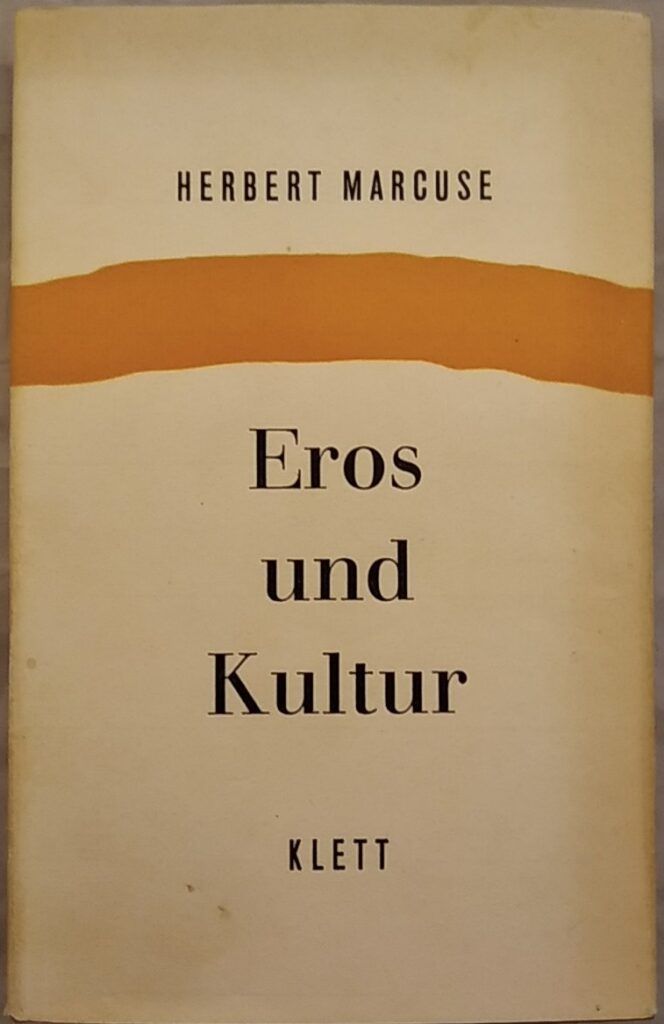
In his book Eros and Civilization (1955), Herbert Marcuse reinterprets and subverts Freudian theory. According to Freud, culture demands that we repress our erotic impulses to make social life possible: the pleasure principle—our natural tendency to seek enjoyment—must submit to the reality principle, that is, to the rules, requirements, and restrictions that make coexistence possible.
But Marcuse raises a crucial question: how much repression is really necessary?
The answer he proposes is disturbing. In modern societies, we do not only repress what is necessary to live in community—we over-repress. This is what he calls surplus repression. It is like tightening your belt two holes further than necessary. It is not just about securing the structure, but also about stifling movement. It is an additional repression that no longer serves to regulate social life, but rather to maintain the economic order, the division of labor, and domination—the logic of a social order based on productivity, hierarchy, and control.
Thus, pleasure in capitalist society is channeled, deformed, and ultimately subjected beyond what is necessary, sacrificing the possibility of a freer, more playful, and erotic life.
Let us think about the fable of the cicada and the ant.
The cicada sings; the ant works. In the traditional version, the moral seems clear: one must be like the ant—disciplined and forward-thinking. But what if this fable were also an ideological tool for internalizing surplus repression? What if the cicada’s song, far from being a sign of vice or imprudence, represents Eros marginalized by a culture of performance?
Of course, it could be rightly objected: do we not live today in a culture of enjoyment? From the revolution of May ’68 through the counterculture, sexual liberation, and the cult of hedonism—has the ascetic ideal not shifted toward a festive one?
Marcuse would have foreseen it. Late capitalism is capable of absorbing even the desire that seeks to resist it. What we see today is not so much a liberation of pleasure as its instrumentalisation. Enjoyment has become an obligation disguised as freedom: the imperative to “be yourself,” to have experiences, to consume pleasure, to display happiness, desire, sexuality, availability. The old repression has been replaced by a new mandate of enjoyment—but only under the terms dictated by the market.
That is the perverse twist: the pleasure principle has been subsumed by the performance principle. Enjoyment is no longer repressed—it is advertised. Desire is no longer denied—it is monetised. It is as if the cicada has been told what to sing, how, when, and for how long. What was once spontaneous, vital, almost animal, is now programmed and standardized, subject to criteria of performance and professionalisation.
That is why procrastination, fatigue, and guilt for “not performing” appear not only in the workplace but—paradoxically—also in the realms of leisure and pleasure. As I once mentioned elsewhere about Žižek: it is no longer enough to produce. Now we must also live well, feel fulfilled, travel often, party hard, do substances, and—of course—fuck like we are possessed. You must be a professional at enjoying yourself. And if you fail to meet that paradoxical mandate to produce even your own enjoyment, you are out again—you become a misfit, a loser.
We are no longer free. Even transgression—that space where desire once took refuge—has been programmed, packaged, and sold.
That is why procrastination is not just a failure of will, but an unconscious form of disobedience. The body stops; it takes its time; it disperses—not because it does not want to do something, but because it does not want to do it that way. It is a silent protest, a minimal interruption against disciplined time. As if desire, still buried beneath the asphalt of duty, were finding cracks through which it can still breathe.
Marcuse, Freud’s heretical heir, does not propose abolishing culture or returning to an instinctive childhood. Instead, he imagines another form of civilisation—one in which the reality principle is not colonised by economic necessity but open to playfulness, to the erotic, and to the artistic. A life less subjected to efficiency, more open to spontaneity and expression.
Without performance.
Without achievement imperatives.
A life that reconciles Eros and Logos—where rationality is no longer at the service of repression, but allied with Eros.
A life in which we can all finally become that dilettante cicada, singing freely and playfully.
Hernán B. Aliaga is a writer and a social philosopher. He is a former lecturer at Pontificia Universidad Católica, Peru. He has been educated between Lima and Berlin where he now lives and is working on his doctoral thesis on social theory. He is an active commentator on social media. This is the first of a series of articles on social philosophy for Perro Negro in English. Most have already posted in Spanish in his Instagram page. You can also follow him on https://hernanbaliaga.substack.com/ and TikTok

Other Articles

Neumond
Debate sobre el aborto: ¿dónde está el niño?


No Comment! Be the first one.