

By Professor Jason Wilson
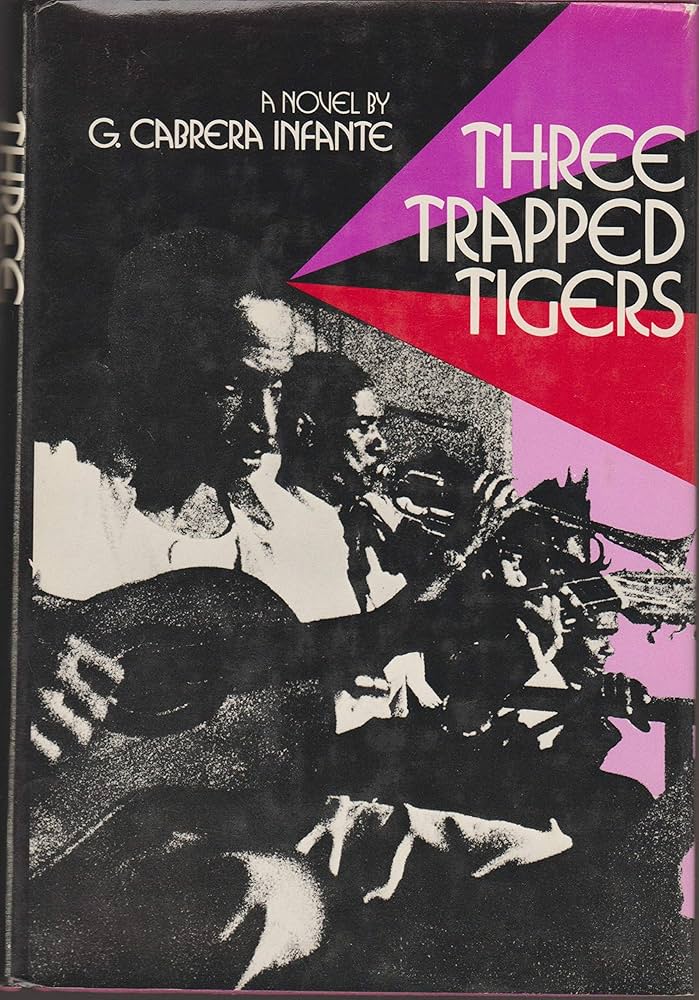
He was the most famous Cuban writer forced into exile after Fidel Castro’s infamous dictum “Within the revolution, everything; against the revolution, nothing”. Guillermo Cabrera Infante was passionate about cinema, satire, puns, tongue twisters and about his lost home: Cuba. In London he wrote his best-known work, Three Trapped Tigers, published in 1967 and thirty years later he received the prestigious Cervantes Prize. Once he described himself as “The only British writer who writes in Spanish“. This interview is a precise radiography of him as person and author
The interview began over the telephone.
‘I understand you like written questions.’
‘What I like is written answers but they don’t come easy.’
‘I’ll bring the questions over and drop them in your mailbox.’
‘My mailbox or my female box?’
‘You tell me.’
‘Join us. It’s a big box.’
‘I’m afraid I’ll interrupt your work.’
‘I welcome interruptions. They’re the best excuse for not working. You know the difference between a journalist and a writer?’
‘I’m afraid I don’t.’
‘Are you always so afraid? Never mind that. Here’s my version of Auntie and the grasshopper. The journalist works hard but makes everybody believe he doesn’t work at all. The writer is the other way round. He works hard at making believe he is working when he’s not. Take a look at Truman Capote or closer to us at William Gerhardie. They toiled for years like peasants by Millet and they left nothing behind but empty furrows on their agents’ foreheads. Or take a look at Hemingway.’
‘Then I’ll see you later.’
‘Abyssinia.’
Could you open by outlining the genesis and background to your fiction beginning with the realist stories of Así en la paz como en la guerra (1960)?
I disowned Así en la paz como en la guerra (In Peace as it is in War) because it’s worse than a realist book: it’s a Sartrean disaster. Un desastre de Sartre. There are some short stories that are salvageable, though. But that’s not the genesis of a book. Nor anything except the urge to publish.
My first true book is my second book, which should be considered first. It’s called Un oficio del siglo XX. It can be translated as A Twentieth-Century Job to create a confusion between job and joke. It’s my job, but the reader should be a true Job. Apparently it’s a collection of my movie reviews, written from 1954 to 1960, but it actually is the fictionalized biography of a movie buff off the cuff. It is encapsulated in a prologue, an intermission (as in the phrase ‘Now there will be a short intermission. To cater for our patrons there is in the foyer a portrait of Charles Boyer’ …), more later, and an epilogue. When the book begins the reviewer (like all reviewers he thinks he is a critic), called G. Cain, is about to die because his days of cinema and reviews are over. His farewell is some sort of, as he is not alone, morituri te salutant. They, a lot of dead film stars, salute me because I’m going to write Cain’s bio.
Cain must die cine die. His critical body is his corpse and I must write his biography over his dead corpus. The book is rather confusing because Cain dies more than once and keeps coming back in all the old familiar places. As a matter of film, he is a familiar: just an oldie reprised over and over. He is the biographer and I’m the biographer and it all happens as in any ‘Biography’ of the mind. Confusion creates its masterpiece at the end. Or as in a cast after the end. There is an index (called ‘Index Gelardino’ in honour of another film buff) where you mustn’t expect to find any directions as to the content of the book. My index, like so much flattery, will lead you nowhere. It is in fact a guide to mislead you. In other words, it is a labyrinth. Be that as it may, the book can be funny and can be fact. It is now a cult book and a generation of film critics everywhere in the Spanish-speaking world has bought or borrowed it. They have also borrowed from it. It’s a book I like, which is more than I can say of many books.
With Tres tristes tigres (Three Trapped Tigers, 1967) your style seemed to change radically.
If you read Un oficio del siglo XX you’ll know where Three Trapped Tigers began. To help your readers I make a tongue-twister into a voiceless shop. By the way, did you know that the ‘T’ is the twentieth letter of the English alphabet and the symbol of perfection? My book should suit my reader to a T. (Think about it.) There is no literary revolution, rather an evolution. Or, as Ben Jonson called tobacco, a Havanah ebullition. A sudden outburst, for the book was partially written in Havana, Brussels and Madrid: from Fidel to Franco and under the spraying Manneken Pis. In the novel there are several human versions of the boy peeing in the rain.
Tell me about the prize you won and why publication was delayed.
The prize was the prestigious Spanish prize (all prizes are prestigious: it must be the Homeric tradition) and publication was delayed because of a case of persistent censorship. Though no worse than in my country: twenty years after publication Three Trapped Tigers is a liber non grata in Cuba! All my books have become samizdat in my homeland that is not my homebase. I had to rewrite the book, change its title and pray a little. The Spanish censor was more moronic than malignant. For instance, every time I wrote ‘tit’ the censor, who knew I didn’t mean a bird, changed it to breast or chest. Though ‘tit’, teta, is in the dictionary of the Royal Academy and in every Spanish dictionary. It means ‘teat’, as in English. So much tit for tat.
In one of the parodies of Trotsky’s assassination I wrote ‘the assassin employed a decide weapon’. It was decided with a small d. Well, the censor crossed it out. Obviously he thought that to kill a god is to kill God. A Nietzschean censor no doubt. All in all he made twenty-two cuts in the new version of the book. Some of them were long, others longer. For him it was a case of ars brevis, foetus longa. But he had a major contribution to make. At the end, there is a long monologue of a madwoman in a park. She rants about the Catholics, laying it very, very thick. The contributing censor cut some sixteen lines of what the madwoman had to say about the Catholics and their church. But he stopped, I swear, at this line: ‘Can’t go no further.’ That’s where the book ends! Next question please.
I have read about some of the problems you encountered translating Three Trapped Tigers . Could you say how you worked and collaborated with your translators?
The problems were many in English, in French, in Italian and now in German, a totally mad language of which I know nothing. But I know my book. I should know it by now. In all these languages I found very good translators. The formidable Albert Bensoussan, a professor of Spanish at the University of Rennes, was the first to translate the book. Like all Frenchmen he had an obsession with French. To every other pun he objected with a vigorous ‘C’est pas français’. Until I convinced him that the original wasn’t precisely Spanish. He did a great job and the book got the prix du Meilleur Livre Étranger in 1970.
Then came English. Jonathan Cape, who wanted to publish the book then, chose a poet to translate it. First mistake. The poet came riding on a bike: second mistake. And, third mistake, the poet didn’t know any Spanish. I helped him. I helped a lot. Until one evening he called it a day. I couldn’t do the translation myself, among other things because I was writing a screenplay titled Vanishing Point and helping to make it into a movie, which is like making war in peacetime. I did my best but it wasn’t enough.
Along came Suzanne Jill Levine. She offered to help me. She was still studying Spanish or had just graduated. Anyway, she had that kind of Marxist upbringing that I love (by Marx I mean Groucho of course). We got along swimmingly: I had a finger in every page. Anybody who can read English can be that. I even delivered the final draft to my American publishers, Harper and Row (which I never pronounce to rhyme with bow). Jill helped. As Humphrey Bogart says of Lauren Bacall, ‘She’s good. She’s very good.’
Of course my authority on these translations comes from the fact that I am the author. I believe, firmly, that translators fear to tread where writers rush in.
What was the main difficulty with translating Tres tristes tigres?
The main problem with Three Trapped Tigers was not the wordplay, that is puns and facetiae. I had my share of those in Spanish but English is the lingua mirabilis for puns, the punster’s paradise. As a matter of fact England can be called Paronomasia. And that can take care of that. The awful truth is that Three Trapped Tigers is fifty pages longer than Tres tristes tigres. All of them full of puns! That’s how the jackass crossed the bridge: on a pons asinorum. There were so many puns that I even rewrote one or two already written by more prestigious punsters, like Lewis Carroll and Vladimir Nabokov.
author by the way has a pun for a name in Spanish: Walter Redfern (red fern is helecho rojo and it can easily become lecho rojo or the red bed and no reds under the bed please) let me know that two of my favourite puns in Three Trapped Tigers , Crime and Puns, the well-known novel, and an inversion, diaper/repair, must be credited to Vlad the Imp. But my foolish art reminds me of Joyce. Mad thematics. As the Manneken says, tan pis! But my book, besides the puns, was a gallery of voices … and that you cannot translate. You can translate texts but not voices. Not even in music, and Three Trapped Tigers had not only a lot of voices but a lot of singing as well. In spite of my close attention to the translation of that book it has not been truly translated. On the other hand, it has never been traduced. Three Trapped Tigers is a version and sometimes a perversion. All in the name of art, which can be read as a fart! Or as the MGM lion roared, Arse gratia artis. I’ve suffered enough!
Do you view La Habana para un Infante difunto (Infante’s Inferno, 1979) as an autobiographical fiction? An anti-Casanova’s memoirs? A tribute to women?
La Habana is the biography of a city that perhaps never was. I have a lot of respect for Casanova. He was making love when everybody around him was only making hate or making war. Arthur Machen has turned his memoirs into a masterpiece. I’m glad that I never read Casanova in Spanish and as he wrote his Memoirs in French there’s no Italian love lost between him and me.
No, La Habana, if anything, is my version of the Don Juan myth, with Havana playing the part of Seville, the river made into an ocean and the stone guest is Ovid who in Spanish mirrorverse is divo. For many years I wanted to write a Cuban version of Don Juan, the Zorrilla comic drama rather than Tirso’s tragedy. All of a sudden, at the very end of La Habana, I discovered that my book had accomplished what I never could.
Of course there is a writer called Red Witt Hindsight who writes masterpieces after the fact. It’s a tribute to the riba. I mean, all the women in the book are Cuban. There’s an old Cuban song written by a composer (he appeared in Three Trapped Tigers and George Gershwin paid him homage by stealing a tune from him, believing that it belonged to folklore) when he was in New York for a recording in 1930. The plot (songs used to have plots then) is that he sees a bosomy woman walking down Broadway and he instantly knows she is Cuban. The composer accosts this pretty pedestrian with twins, Lo and Behold. She is Cuban all right. Now he sings:
Those who don’t mince their steps,
they are not Cuban.
Those who don’t have a wasp waist,
they are not Cuban, etc., etc.
The song ends with:
Cuban girls are the pearls of Paradise!
Pretty, ain’t it?
Did the translation into English (Infante’s Inferno, 1985) involve you in the same way as translating Three Trapped Tigers ?
I took command of the book, as Dante would say, da capo. Starting from the title (what translator would have thought of such irreverence?) Infante’s Inferno is all mine or all a mine, as the title might mean. All the women I once cared for are there, even my mother. Though sometimes I stab at mater. Some others are dull adults’ dolls. I’m a base West Indian who throws pearls of paradise to swine.
One of the pearls is an island richer than all its tribes. In a summer manner I can say breezily that Havana is bigger in my books than she is in memory. She was bigger in reality because she was life. But there’s a lot of prosaic acid in life. In my books there is poetic jest. Here stiffs say things of the cough because they died tubercular. They can say, ‘I’ll have coffee in the coffin, Cuffs!’ because it isn’t they talking: language talks for them. Or, ‘A grim ace’, played with a grimace. Or having Conrad leaving a brothel and crying out loud, ‘The whoreror! The whoreror of it!’ Or of a lost lover to say that she was Eloise hoisted by her Abelard.
That’s in English but it can be worse in Spanish or in a French parody: a musing scene, miss sans scène, a miss en scène. All this was culled here and there from future fictions. Desdemona dressed to be killed because Othello suspected her of some hanky-pankies. A Hamlet versed only in the martial arts answering Polonius’s question, ‘Swords, swords, swords’.
I recently saw a garage near Oklahoma City called Onan. It was of course a self-service. All you had to do was to produce the hose. My host, a poet, thought that my Onanist connection was a blow below the Bible Belt. Finally we were onanimos.
What happened to your announced novel Cuerpos divinos?
Cuerpos divinos (it means Divine Bodies!) is not just a pretty title. I have completed the first book (there are going to be three of those) and an epic logue, which is a fourth book. In this book, literally, nothing happens. It is only the recorded shit chat of three characters, one the everlasting narrator, and two minor characters who become major out of resilience and into the night. One of them speaks English only, for he considers Spanish a dead tongue. The conversations begin long before the Revolution and last until the main character in this dialogue leaves Cuba to settle in California. His name is Walter Ego and when he reaches his destination he sends his friends a cable which says: ‘Et in arcadia.’ Signed, Ego. That’s the beginning and the end of it. All I need now is what in the War-in-the-Pacific movies was called ‘to fill the gaps’. That’s all the method there is in my writing madness.
I’ve been introducing lately an extraordinary moviemaker called Henri d’Arrast (he was a French Basque) called in Hollywood in the 1920s Harry d’Arrast. I wrote a long article about him; I’ll present him at the Barcelona Film Festival, as I did at the Miami Film Festival. My presentation was a single sentence: ‘D’Arrast is silence.’
Could you say something about how as a Cuban you relate to Hispanic culture?
There is a mutual magnet, the Spanish language. I’ve been constantly opposed to the tag ‘Latin American’, mostly because it’s used politically. Imagine, just imagine, a country ruled by a totalitarian dictator. Let’s say this country is an island not entirely of itself. There is a geopolitical law that rules that all islands tend to govern the nearby continent. Suppose that a continent and a half (Mexico, Central and South America) becomes an enormous island. There you have Latin America. It’s easier to rule over an island, no matter how big (look at Australia) than over many countries with many names and many identities.
But if there is a reason to talk of Latin America, this is a language reason, mostly the Spanish language. There is, no doubt about it, a continuum that runs from the Pyrenees to Patagonia. This set of elements is the Spanish language. I’m being read in Spain as I once was in Cuba. Sometimes, though, I wonder if what they read is what I wrote. That’s, of course, a risk all writers must take.
You once said that between Quevedo and Borges there is nobody. Could you say something about Borges?
I’ve seen Borges become more and more a great writer, from the time I first read him in 1947 to today. I once told him in Brown’s Hotel, apropos of the Nobel Prize, that he was the only writer writing in Spanish now, but here was joy, not Joyce, in his laughter. Borges has also become something of a sage and that’s quite a feat these days. It also is quite a feast. Borges is a joy to all readers but to the Spanish reader he was, first of all, quite a revolutionary writer.
Not only for what he wrote but for the way he wrote. The way he places an adjective (as you know this is a decision before the noun in Spanish, where el gran hombre and el hombre grande mean very different things) and the adjectives he chose, or perhaps invented, were a very new thing circa the late 1930s. He was a fearless man and a fearless writer. One must be very humble before Hombre de la esquina rosada. He dared dissolve that story and that language.
Though he was right most of the time one should say that he was right even when he was wrong. As he said of Quevedo, Borges is not a writer but a literature.
Jason Wilson is an Emeritus Professor at University College, London. He has published numerous books, including Octavio Paz. A study of his Poetics (CUP, 1979, into Spanish in 1980, reprinted in 2009) and Octavio Paz (Twayne, 1986), Jorge Luis Borges (Reaktion Books and Chicago University Press, 2006, translated into Portuguese 2009, Chinese, 2011 and Turkish 2011), A Companion to Pablo Neruda. Evaluating the Poetry (Tamesis, 2008 and paperback, 2014), He has edited and translated Alexandre von Humboldt’s Personal Narrative of a Journey to the Equinoctial Regions of the New Continent (Penguin Classics, 1995), His most recent publication is Living in the Sound of the Wind. A Personal Quest for W. H. Hudson, Naturalist and Writer from the River Plate (Constable, 2015, paperback 2016, into French 2018 and into Spanish, 2023, with Ateneo). He spends his time between London and Buenos Aires. He is currently writing on how he became a hispanist.
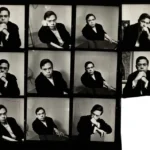
Main image: a multiple portrait of Guillermo Cabrera Infante, National Portrait Gallery in London

Cabrera Infante: A Summery Interview – Part II
Fue uno de esos días



No Comment! Be the first one.