

By Professor Jason Wilson
The third of a triad of articles in which Professor Wilson explores the relationship between poetic inspiration and philosophical expectations in 20th century Latin American poetry. In the first part of his last instalment, he looks at the connections between Neruda and Quevedo and how for the Chilean bard love and sexual desire could be read as analogous forms of tyranny but a tyranny that shaped him as a poet
Pablo Neruda (1904–73)
My final example is the Chilean poet Pablo Neruda, who came to stand, in the world’s eyes, as the Latin American Poet; from working-class origins in Temuco, southern Chile, to winning the Nobel Prize for Literature in 1971 was a long journey, that included five lonely years (1927–32) as honorary consul for Chile in British Burma and Ceylon and Dutch Indonesia. Neruda began writing early; his second collection of poems, Veinte poemas de amor y una canción desesperada, published in 1924, when he was 20, caught the public’s imagination, by 1972 reaching sales of over two million copies. However, a sixth sense told Neruda that he had to travel, know the world, experience more, if he was to be a great poet. The Latin American journey to literary fame culminated in Paris, cultural Mecca; Darío, also from a poor background, had travelled from Metapa in Nicaragua via Paris to Buenos Aires, where he lived for six years in the 1890s, as he became the leading poet-icon of his generation. Borges had also gone abroad to Europe for seven years (Geneva rather than Paris). Neruda, however, was forced to accept what came along and, passing through Paris, found himself in Rangoon, Burma in October 1927. He remained in that region for five years, with long stays in Wellawata, Colombo and Batavia, Indonesia, returning to Chile in 1932 with a wonderfully different book of poems called Residencia en la tierra (1933); republished in augmented form in Madrid where he was consul in 1935. Neruda has always been a dauntingly prolific poet, his complete works number three fat volumes, 3,522 pages. Yet in the Far East, over a period of five years, Neruda wrote only 19 poems.
1927–28 are his crisis years; in a letter of 1928 he described Rangoon as an oven, a hell, a terrible exile; he couldn’t write or read, he felt like a ghost, dressed in his white suit and white cork hat. He was not English, was not even European, but was white, despite his miserable, irregular salary. The ‘horror of these abandoned colonies’ drove most Europeans to drink, the chota peg, the ‘terrible tropical whisky’. Neruda’s bizarre social position ensured that he was not fascinated by Eastern glamour, did not become a spiritual tourist; he mingled with the dispossessed crowds, ‘the street was my religion … real life’. What Neruda did find were ‘girls with young eyes and hips’ with flowers in their hair and rings on their toes and ankles, and one of these girls became his lover. Her name was Josie Bliss, though that was not her Burmese name, which Neruda never revealed, if he remembered it at all, or could spell it. They communicated in English, and she lived out her name to the full; it could even have been his nickname for her for, over those years of exile from Chile, Neruda devoured writers like James Joyce, T.S. Eliot and D.H. Lawrence; bliss in his English meant sexual, not religious bliss.
That Josie Bliss was crucial to his poetry as a real-life muse simply confirms Neruda’s romantic view that experience, the more intense the better, informs his poetry. The last, culminating poem of his Residencia en la tierra I y II (1935), is titled ‘Josie Bliss’ as recognition of her muse-like status, but the gently nostalgic poem conceals her reality; however, she surfaced, namelessly, in several earlier poems in the collection and she haunted his memory for the rest of his life. All we know of Josie Bliss is what Neruda tells us. In his memoirs Neruda recreated this affair in this British colony run along caste lines, the Burma George Orwell hated where ‘you see the dirty work of Europe at close quarters’ and where Orwell learnt that ‘imperialism was an evil thing’. Neruda was boycotted by the English and their Strand Hotel, clubbish life because he lived with a native. Josie Bliss was forced to dress like an English woman, but in his house threw off her shoes, put on a sarong and used her Burmese name, though they spoke English to each other. As their free relationship flourished, she became intensely jealous, would stalk Neruda’s mosquito-netted bed with a long knife, threatening to kill him, until Neruda could take this passionate jealousy no more and escaped to Ceylon without telling her, leaving everything behind, his clothes, his shoes, his books. Later she followed him out to Ceylon, moved in next door playing the Paul Robeson records they both loved, insulting the women who visited him, until she was persuaded to leave. At the port in Colombo Neruda fixes Josie Bliss, ‘amorous terrorist’, in an unforgettable image; she had bent down and kissed his chalked shoes, then stood up with tears running down her chalk-smudged face. He confessed that after she left ‘my heart acquired a scar that has not healed’. The vivid way in these later memoirs that Neruda turns this love-story into an adventure-abroad belies this scar.
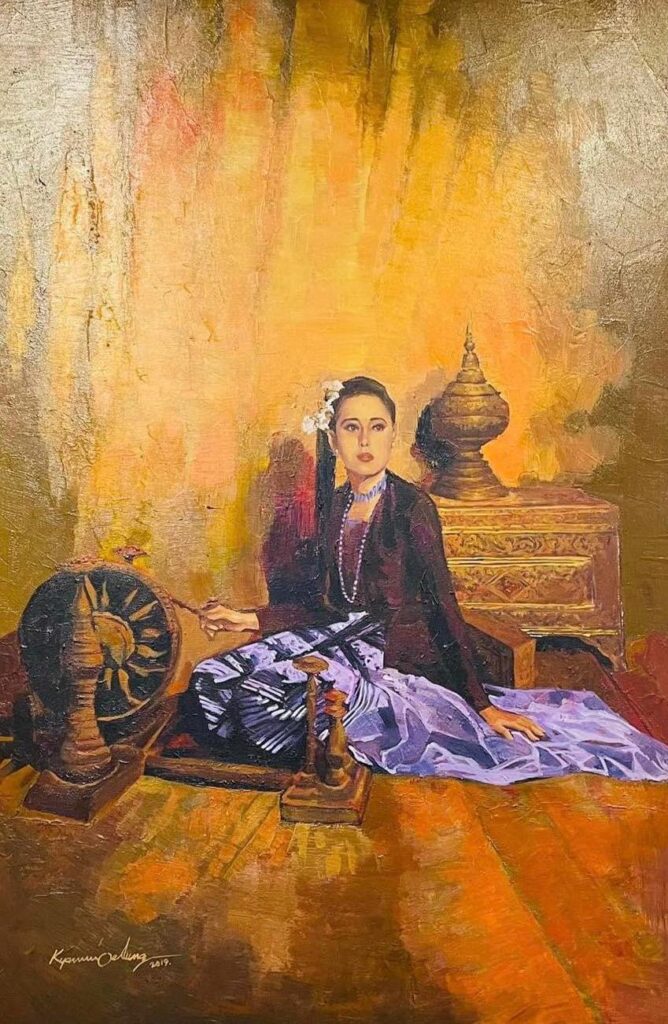
Reading Neruda’s poems as scars reveals another story. This secondary story does not focus on the kitchen knife or the coconut palm, on castration fears and jealousy, but on a sexual relationship where Neruda contacted a mystery, Darío’s enigma, a powerful energy that panicked him, literally, forced him to run away. Neruda boasted that his path to knowledge, both of the self and the world, was not through bookish culture. In 1926 he wrote, ‘I hold a dramatic and romantic concept of life; what doesn’t deeply touch my senses means nothing to me’; he evoked his ‘physical absorption’ in brute life, criticising Jorge Luis Borges in 1929 (Borges was then only a poet), he admitted to a ‘scorn for culture as an interpretation of life’ and sought ‘a knowledge without antecedents’. In the prologue to his sole novel, El habitante y su esperanza (1926), Neruda outlined his poète maudit pose as being ‘an enemy of laws, governments and established institutions. I am disgusted by the bourgeois and I like the life of dissatisfied and restless people, whether they’re artists or criminals.’⁴⁵ In a 1928 letter he evoked his poetic credo: ‘poetry should be charged with passions and things’. This lawless position was tested to the full by Josie Bliss, his Burmese muse. My question is: Why did Neruda refuse to live out his literary fantasies?
“Neruda’s real predicament: in order to write poems he, like Nerval, had to reject his muse, become a viudo; a poet cannot write and live the poem. In Yeats’s terms, he must chose; either perfect the work or the life, not both.”
The poem Tango del viudo (Widower’s Tango), written in 1928 after fleeing Josie Bliss, recreates the dramatic mosquito-net, knife incident in Dalhousie Street, Rangoon and is one of Neruda’s greatest poems. Let us examine the fertile title: first, tangos. From being brothel music without words in Buenos Aires, the tango had been taken up in fashionable Paris in the 1920s and made respectable. Its words tended to be a man’s lament at being betrayed by his woman, often taking his revenge with a knife. The brothel origins of immigrant men waiting for whores, whom they could never trust or love, are implicit in the very melodies of the music; an Argentine critic typified the dance as ‘stylised copulation’; it is metonymically South American. Tango melody contaminated the way Neruda read his poetry; a biographer, Volodia Teitelboim, once recorded Neruda reading from these Residencia poems in these words: ‘he murmured, without inflections, in a monochord, moaning manner’,without making the obvious association with tango.
The ‘viudo’ (‘widower’) of the title is equally rich in echoes; Neruda was not married to Josie Bliss, but was tempted to settle with her. According to Norman Lewis, sexual moeurs were extremely lax in Burma (‘marriage is considered to exist, without further ceremony, when a couple are seen to eat together … an extraordinary sexual freedom). Confirming this sexual laxity, Neruda, in a short prose poem, ‘The Young Monarch’, wrote:
“Sí, quiero casarme con la más bella de Mandalay, quiero encomendar mi envoltura terrestre a ese ruido de la mujer cocinando, a ese aleteo de falda y pie desnudo.”
[Yes, I want to marry the most beautiful girl in Mandalay, I want to commend my terrestrial wrapping to that noise of a woman cooking, to that rustle of dress and naked foot.]
And he calls this Mandalay woman ‘my Burmese wife’. Now, Neruda wrote this prose poem after abandoning his ‘wife’, Josie Bliss, for it closes with the poet crying her absence. Thus, the title ‘Tango del viudo’ asserts that Josie Bliss left Neruda a widower, she ‘died’; the poem deceitfully reverses the biographical situation, for in fact he ‘killed’ her, to extend the death metaphors, by running off. The reference to ‘Mandalay’ immediately evokes (for any Anglo reader, that is) Kipling’s cocknified poem of that name where a Burmese girl (let’s call her Josie Bliss) under a palm-tree summons her fugitive lover ‘come you back to Mandalay’. But Neruda ignored this plea, pretended to be a ‘widower’. More, le veuf, in poetic terms immediately recalls Gérard de Nerval’s famous sonnet ‘El desdichado’, with its Spanish title meaning he who lost his dicha or happiness, an elegy to loss and melancholy, with references to Mélusine and Orpheus. Nerval’s sonnet opens: ‘Je suis le ténébreux, — le veuf — l’inconsolé / Le prince d’Aquitaine à la tour abolie’ [‘I am the brooding shadow — the bereaved — the unconsoled / Aquitaine’s prince of the doomed tower’]; his star is dead, and his lute ‘bears the black sun of melancholy’. Nerval laments the loss of his muse, given mythic reverberations through naming Lusignan and Orphée who both were the active agents of this loss of a muse; Lusignan by spying on Mélusine when she had her day off, and thus condemning her to revert to her scaly tail, and losing her as she screams in outrage and disappears, and Orpheus by turning round to see if Eurydice is following him and thus breaking his word and losing her too. If we read this sonnet as written by Neruda, that he was ‘le veuf’, then we have both a confession of his active rejection of Josie and the subsequent bleakness and melancholy.
Thirty years later in his collection Estravagario (1958), Neruda changed the gender of Nerval’s sonnet to ‘La desdichada’; it opens laconically: ‘I left her in the harbour waiting / and I went to never return’; time and the Second World War have blotted out his presence on his verandah, with his hammock, his plants, and ‘that woman waiting’. Neruda still suffered guiltily for having abandoned Josie Bliss; in fact, he is the one still waiting, he is the ‘desdichado’. In 1964, in a poem called ‘Amores: Josie Bliss II’ we read: ‘I wanted to tell her that I too / suffered: / it’s not enough: / he who wounds is wounded himself until death’. Now we move beyond psychology, for Neruda wanted to abandon his muse in order to write, his consolation would be his poems. Neruda’s real predicament: in order to write poems he, like Nerval, had to reject his muse, become a viudo; a poet cannot write and live the poem. In Yeats’s terms, he must chose; either perfect the work or the life, not both. The real decision: Neruda preferred to write about Josie Bliss than live intensely with her. That is, he chose to be a poet, not live poetically. He confessed as much in a letter of 1928 after bolting from her: ‘yes, that depressing moment, disastrous for many, was noble matter for me’. Melancholy, widower’s grief, is the real muse. Josie is secretly present in his mind as ‘an extreme bee [that] burns without truce’ ([‘una abeja extremada arde sin tregua’] from another poem ‘Diurno doliente’), as she managed to ‘apaga mi poder y propaga mi duelo’ [quench my strength and spread my grief].
The 1928 poem ‘Tango del viudo’ opens as a verse-letter written to Josie in the intimate tú address from on board the ship as the poet escapes, and vividly evokes Josie and Neruda’s domestic life together:
Oh Maligna, ya habrás hallado la carta, ya habrás llorado de furia,
y habrás insultado el recuerdo de mi madre
llamándola perra podrida y madre de perros,
ya habrás bebido sola, solitaria, el té del atardecer
mirando mis viejos zapatos vacíos para siempre,
y ya no podrás recordar mis enfermedades,
mis sueños nocturnos, mis comidas
sin maldecirme en voz alta como si estuviera allí aún,
quejándome del trópico, de los coolíes corringhis,
de las venenosas fiebres que me hicieron tanto daño
y de los espantosos ingleses que odio todavía.
[Oh Evil Woman, by now you will have found the letter,
by now you will have cried with rage
and you will have insulted the memory of my mother
calling her a rotten bitch and a mother of dogs,
by now you will have drunk alone, all by yourself, your afternoon tea
with your eyes on my old shoes which are empty forever,
and by now you will not be able to recall my illnesses,
my dreams at night, my meals
without cursing me out loud as though I were still there
complaining of the tropics, of the Corringhis coolies,
of the poisonous fevers which did me such harm,
and of the horrendous English whom I still hate]
The syncopation of the temporal adverb ‘ahora’ sharpens painfully in memory the explicit references, especially hating English colonial arrogance, as much as Orwell had.
“Neruda condensed the thrill of Josie in his memory into this aural image of a woman ‘peeing’ at night in the silent house. Neruda has accepted everything in Josie as divine and poetic, down to her excretory functions. His lover’s acceptance turns ordinary orina into miel and four incantatory adjectives; that is, her ‘urine’ triggered off his poetic fancy, made him a poet.”
The poem’s second stanza evokes Neruda’s return to what he loathes most but has cunningly chosen, loneliness, the absence of his lover; he is back to eating cold food alone in restaurants, living without coathangers or portraits on the wall, and missing Josie: ‘How much of the shadow that is in my soul would I give to have you back’. But it was too late; Neruda, as befits a Lusignan and an Orpheus, would write an extraordinary poem like ‘Caballero solo’, with a ‘necklace of throbbing sexual oysters’ surrounding his ‘solitary residence’, in Ceylon about the grief of sexual loneliness.
The third stanza of ‘Tango del viudo’ returns to Josie in Rangoon and the famous knife which Neruda feared would kill him which he buried under a coconut tree; but memory transformed this metal knife into a mental fetish:
y ahora repentinamente quisiera oler su acero de cocina
acostumbrado al peso de tu mano y al brillo de tu pie:
bajo la humedad de la tierra, entre las sordas raíces,
de los lenguajes humanos el pobre sólo sabría tu nombre,
y la espesa tierra no comprende tu nombre
hecho de impenetrables substancias divinas
[and now suddenly I would be glad to smell its kitchen steel
used to the weight of your hand, the shine of your foot:
under the dampness of the ground, among the deaf roots,
in all the languages of men only the poor will know your name,
and the dense earth does not understand your name
made of impenetrable substances]
Knife, then, like cadera (hip), is synecdoche for Josie, her touch, her smell; she is danger; her real Burmese name never explicitly mentioned by Neruda is the only word worth repeating, hoarded by him as a talisman. That Josie Bliss is knife is repeated metaphorically in all the later poems alluding to her; she is not only ‘evil woman’, but often the ‘enemy’, the ‘wide-hipped enemy’, the ‘pursuer’, the ‘panther’ and ‘tiger’ with claw-knives out to hunt him like a harpy. Josie Bliss as ‘enemiga’, in the poem ‘El abandonado’ where Neruda continued to invert the facts as if he had been abandoned by her, is the oracle, the enigma, the Kali / Salome, he didn’t dare face up to (unlike Darío): ‘I don’t know who you are but I owe you so much / that the earth is filled with my bitter treasure’. Josie, the hostile muse who provoked the poet to be himself and choose what kind of poet to be, spoke a forgotten language, ‘los más dulces / suspiros’ [‘the sweetest sighs’], perhaps her Burmese name, buried deep inside her, a ‘hidden fire’ [‘fuego oculto’].
In the third stanza of ‘Tango del viudo’ Neruda recreates Josie Bliss in his memory in cosmic and telluric metaphors; her legs ‘stilled and hard solar waters’, her eyes ‘swallows’, her heart ‘a dog of fury’. Josie Bliss as dog of fury [‘perro de furia’] awakens a mythical resonance and alludes to another of Neruda’s great Josie-love-poems, ‘Las furias y las penas’ [Furies and Heartaches] (written in 1934, but not published until 1947), for Josie, the enemy, literally reincarnated the Erinnyes or Furies, the angry ones who, according to Robert Graves, ‘avenge crimes of parricide and perjury’, induce remorse and bad faith, ‘punish such crimes by hounding the culprits relentlessly from city to city and from country to country’, with their snake-hair, coal-black bodies and blood-shot eyes. Neruda’s melancholia is Josie, the dog of fury, hounding him in his heart, dictating poems to her fearful power, her ‘rencor de puñal’ [dagger rancour].
The last stanza of ‘Tango del viudo’ suggests a Faustian exchange: Neruda would give everything to hear Josie’s ‘abrupt breathing’, that brusca [‘abrupt’] making her so suddenly there in his mind, suggesting lover’s panting. But more extraordinarily, for Neruda withholds this detail to the poem’s end, he would give everything in his soul:
Y por oírte orinar, en la oscuridad, en el fondo de la casa,
como vertiendo una miel delgada, trémula, argentina, obstinada
[… to hear you pee in the dark, at the end of the house,
as though you were pouring a thin, tremulous, silvery and obstinate honey]
Neruda condensed the thrill of Josie in his memory into this aural image of a woman ‘peeing’ at night in the silent house. Neruda has accepted everything in Josie as divine and poetic, down to her excretory functions. His lover’s acceptance turns ordinary orina into miel and four incantatory adjectives; that is, her ‘urine’ triggered off his poetic fancy, made him a poet. Josie freed Neruda’s unconscious, vividly depicted by him as ‘lo sonoro’ (an untranslatable onomatopoeia, perhaps ‘resonance’ or ‘sonority’ explored in the poem ‘Un día sobresale’), the grounding metaphor a silent house at night, where poetry emerges freely, truthfully, as ‘sounds’. He wrote: ‘De lo sonoro salen números, / números moribundos y cifras con estiércol, / rayos humedecidos y relámpagos sucios’ [‘From resonance come numbers / dying numbers and dung-covered ciphers, / dampened thunderbolts and dirty lightningflashes’]; later in the same poem we read ‘Falling from dreams, my soul rolls down into sonority’ [‘A lo sonoro el alma rueda / cayendo desde sueños’]. Neruda located the Dionysiac source of poetry in incantatory sound, thanks to Josie. In this ‘lo sonoro’ les mots font l’amour, in André Breton’s phrase, for only when the poet Neruda breaks the sexual taboos can his inner poetic language break linguistic taboos, a clear link between experience and creativity that Neruda learned from Josie (‘pues ella era el sonido que me hería’) [for she was the sound that wounded me]. In a 1936 manifesto Neruda advocated a poetry that excluded nothing, that accepted everything, without moral discriminations, a penetration into matter ‘in an act of “arrebatado amor”’ [ecstatic love] that was Josie’s lesson; in 1964 in the poem ‘Rangoon 1927’ Neruda evoked this ‘arrebatado’ love as ‘desmedido’ (beyond measure) submerging the lovers in the ‘placer amargo de los desesperados’.
Urine transformed erotically into honey brings us back to the ‘Song of Songs’, as if written by Neruda: ‘Thy lips, o my spouse, drop as the honey comb: honey and milk are under thy tongue: and the smell of thy garments is like the smell of Lebanon’, echoed in his line ‘ay, grandes muslos llenos de miel verde’ [‘ay, your great thighs coated with green honey’]. The transformation of urine to honey, mimicking the transformatory power of poetry itself (a kind of mental honey), leads us to the final clue as to why Neruda backed away and cowardly wrote about Josie as melancholic memory.
Jason Wilson is an Emeritus Professor at University College, London. He has published numerous books, including Octavio Paz. A study of his Poetics (CUP, 1979, into Spanish in 1980, reprinted in 2009) and Octavio Paz (Twayne, 1986), Jorge Luis Borges (Reaktion Books and Chicago University Press, 2006, translated into Portuguese 2009, Chinese, 2011 and Turkish 2011), A Companion to Pablo Neruda. Evaluating the Poetry (Tamesis, 2008 and paperback, 2014), He has edited and translated Alexandre von Humboldt’s Personal Narrative of a Journey to the Equinoctial Regions of the New Continent (Penguin Classics, 1995), His most recent publication is Living in the Sound of the Wind. A Personal Quest for W. H. Hudson, Naturalist and Writer from the River Plate (Constable, 2015, paperback 2016, into French 2018 and into Spanish, 2023, with Ateneo). He spends his time between London and Buenos Aires. He is currently writing on how he became a hispanist.
This article first appeared as Occasional Papers No 22 of Institute of Latin American Studies, University of London, (2000)
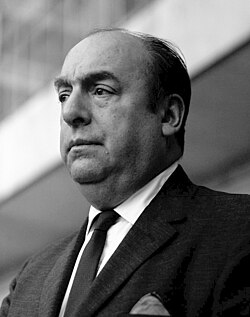
Images: Main image, Neruda’s signature; in the article, Burmese Affluent Lady of the 19th Century (The Royal Gallery, Yangon, Myanmar) and Pablo Neruda in 1963 by Wikimedia


¿Un melancólico objeto del pasado?
El día que la naturaleza se ensañó con Venezuela





No Comment! Be the first one.