

By Professor Jason Wilson
Second and final part of one of the most complete inteviews the late Cuban writer gave in English. Here Cabrera Infante speaks of what it means to chronicle cities like Havana or Dublin. He referes to his compatriots Lezama Lima and Alejo Carpentier, the author of the English’s Quixote, Laurence Sterne, plus the Irish literary tradition via Liam O’Flaherty and James Joyce
In your fiction written in exile you have lovingly and wittily detailed Cuban life, its voices, places, rhythms, etc., so that your work seems a kind of À la recherche du temps cubain. Do you see yourself as the only real chronicler of Cuban life?
Not the only one but the best, and as Margot Kidder likes to say, I’m not kidding. Let’s consider three major Cuban writers this century: Alejo Carpentier, Lezama Lima and Virgilio Piñera. Virgilio is closer to me because he was a dear friend, he was a joyful gay but he is the lesser of the three. He wrote mostly short stories, you see, and his novels were not good.
He was an original (he wrote a story of the absurd long before it was done in Paris) but something is wrong with his writing, a certain weakness, a surfeit of catch phrases and a carelessness about language. His Havana is never there, for he lives in the land of whimsy.
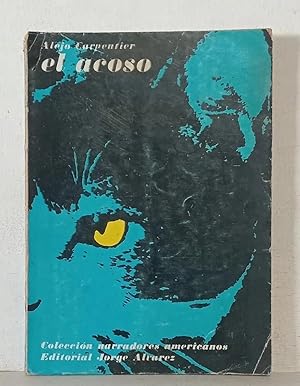
Carpentier is the best writer of them all. He was stingy with me as with everybody, but I can afford to be generous. The only Cuban book that comes close to my Havana books is a novel by Carpentier called El acoso (Manhunt). Like many novels it is actually a thriller, part Liam O’Flaherty’s The Informer, part Malraux’s La Condition humaine. Here you have Havana in a nutshell.
My Havana is in expansion, a universe that began with a whimper and will end in a big bang. With Carpentier you have that breaking point when knowledge is about to become pedantry but doesn’t. Besides, Havana comes off much better than O’Flaherty’s Dublin, even when dreamt by John Ford. Instead of my set of songs you have Beethoven, a symphony orchestra and the collision of culture and violence.
The hunted man is a terrorist super-grass at large. He finds shelter next to a theatre where an orchestra is rehearsing L’Eroica. The constant repetitions of the symphony are more overpowering than the squealer’s fear. In a true coup de théâtre he is killed in the empty orchestra pit. This is a double tour de force, where the writing is like music and the plot a true melodrama. But it is also a thriller, what with the rehearsing and the purple patches.
Lezama Lima, in his only novel Paradiso, his Havana is suffering from the Bloch syndrome. Remember Bloch, the elephantine pedant in À la recherche? I’ve never been able to read this monstrous novel, defeated by a prose thicker than water but not of my blood. He is a considerable poet but his Paradiso is Havana as Hell
.
There is a fourth writer, Lino Novas Calvo. He has written beautifully about Havana in the 1930s, which he knew well. He never wrote a novel and as you know the short story is a limited, limiting form. Erskine Caldwell, John O’Hara and John Cheever were trapped in it, in spite of their novels. Novas Calvo, by the way, wrote a masterpiece called The Night of Ramón Yendía, a short story about an informer driver who, after the fall of Machado, believes he has blown his cover. The story is about what happens to him in the last twenty-four hours of his life. Doesn’t it sound as familiar as a symphony?
The Hispanic tradition is poor in a special kind of word-play epitomized by the pun. Do you feel more in tune with a Sterne, a Joyce, a Lewis Carroll or a Nabokov than any of your contemporary Latin American writers?
Joyce, Lewis Carroll and Nabokov, but Flann O’Brien also. He is a punster extraordinary.
Did the so-called ‘boom’ help you as a writer?
Except for Borges, I don’t see I have much in common with the so-called Boom, which was a political club of writers. I’ve always felt more comfortable, as a reader and as a writer, with Severo Sarduy and Manuel Puig. I rejoice in every new book by them. I reread their old books, especially Heartbreak Tango and From Cuba with a Song and of course the masterpiece Kiss of the Spider Woman. We have a lot in common, especially a firm belief that high culture is haute couture, but that there are prêt-à-porter and ready-mades and jumble sales and even the old rags man.
We understand each other and we believe that literature is everything that you can read, that you can write, including graffiti on a wall and those moving shadows on a screen called the movies. The other writers from that continent called Mongrelia (there is Inner Mongrelia and Outer Mongrelia) are simply too busy reading slogans on placards. You see, they are perched on hustings waving buntings and listening to the bunkum and hokum of supremos and maximos. Severo is made of the stuff of literature; Manuel is an avid collector of movies on tape. When they talk shop, if they do, I never forget that that’s my shop too.
I have read some of your work first in English (on W. H. Hudson, on Padilla and Holy Smoke). Could you say something about writing in another language? Do you feel any affinities with a Conrad or a Nabokov or a Joyce because of this and your exile? Have they been examples, influences or simply pleasures to read?
Language is a river but we are the river. This is a paraphrase of Borges paraphrasing Herakleitos on the river of time. The Greek wrote that song, ‘Take me to the temple on time’. He was a barrister who said this to a cabbie, with the barrier of English between them. The cabbie hit the horse and the road and soon they, speaking different dialects, joined the morning traffic. Sic transit.
Language can be a river and traffic and whatnot but the cabbie and his passenger are different travellers on the same vehicle. One can swim across the river, one can bathe in the river, one can watch the current and sometimes even see an Oxford professor floating downstream like a dead admiral: quiet flows the Don.
If you are Christian enough you could watch an emaciated dark man in a long white robe walking on the river. That man has all the time in the world (he is, in fact, eternal) and he speaks in tongues, while Herakleitos spoke tongues in Greek.
I’m convinced that if you can write in one language, you can write in all of them, including Swahili. Hemingway, for instance, spoke Swahili very well. He could read Spanish if he wanted to but he never wrote in Spanish because, simply, he didn’t need to. I write in English because I want to, because I like the language, because there are two or three writers I consider not only masters of the language but masters of language as well. I wanted to belong in that old time religion.
I had four years of English school in Cuba and I lived three years in Belgium, where I learnt French with Flemish masters. I’m convinced that if I had gone to Paris instead of London I’d be writing in French now — with the temptation of Spanish lurking in my mind.
Since I first came to England, even before moving to London from Madrid, I was writing film scripts: El Máximo, Wonderwall, The Jam and later Vanishing Point. You can correct me and say that screenwriting is no writing at all and I’ll stand corrected. But I also wrote bits and pieces for American magazines and later a very long piece on Cuban culture for the London Review of Books and a long short story for an anthology, London Tales. My story is called ‘The Phantom of the Esso’ and it is my version of The Phantom of the Opera or PhO, as I called him long before Weber or Webber ruined it.
I enjoyed writing it and I enjoyed even more writing ‘Bites from the Bearded Crocodile’. But as Ronald Reagan said, after crying out ‘Where’s the rest of me?’ when he saw he didn’t have any legs, that’s no feat. A true feat is Joyce getting up in the morning and treating English as if it were an alien tongue. Dat’s a feat. No wonder the Joyces spoke Italian at home. Nabokov spoke Russian with his wife Vera, which means true in Italian. Meanwhile, back on his ship, Conrad spoke Polish to himself. After having Polish you can have whatever you want.
Conrad to my chagrin (that’s how I call my grin: cha is short for chachacha) had no humour or a sense of poshlost when all was lost. Yes, I feel a close affinity with Nabokov, though he shunned vulgarity. Fortunately, the man between, James Joyce, was very vulgar. Though I found his excremental excesses distasteful. He mixes the ordinary with the extraordinary and sometimes what he forgets is the ordure. But he can be very funny. Especially after Portrait of the Artist, a pedantic book, and just before Finnegans Wake, its pendant. I am an exile but I’m never silent and seldom cunning. He has been, indeed, an influence, an example, and a pleasure to read, especially Dubliners and Ulysses and fragments of the Wake before I fall asleep.
Some of your non-fiction has a J’accuse quality. What is your view about the writer and politics and those in power?
But not, I hope, Zola’s bête. You know the song of course, ‘Whatever Zola writes, Zola writes?’ Yo no acuso, I simply point. I don’t indict, I indicate. And those who have ears (van Gogh, for example, would be halfway through) let them hear.
I wrote my first tract against Fidel Castro (and I’ve never been a one-tract man) in 1968. It was in fact the first public accusation (without drinking J’accuse) portion of his regime by a writer of some consequence, who had been with the Revolution even before it triumphed and had been its propagandist and barely three years before a diplomat for both regime and revolution.
This caused a scandal but there was no success: nobody listened for they had vowed to be Semper Fidelis and bestowed on Castro the order of Defensor Fidei, which ironically means that he should defend himself.
Those writers had no Latin but Castro had. They mounted a campaign against me, which was a destroy-and-then-search operation. I survived because survival is my business and my business then was making movies. But my books became all of a sudden out of print: my stories were never published in anthologies where, as they say in Spanish, even the cat was admitted, and I began losing weight and friends.
This didn’t happen in Cuba but abroad for, as George Orwell says, you don’t have to live in a tyranny to be a tyrant’s subject.
Do you read contemporary English and American novels?
I read English fiction and American faction. England is where it’s all happening again. The American scene, on yet another hand, is like the prairie in the moonlight: immense but empty. The Americans have developed a huge politically guilty conscience with blacks, browns and beiges. Instead of phonetics they have fanatics: they hear themselves speak but cannot listen to other voices, other booms.
Can you name names?
Peter Ackroyd is the author of a posthumous pastiche, The Testament of Oscar Wilde. Here you see, and above all you hear, Oscar giving away his precious words for free: pearls to pigs. You can even feel how Wilde thinks. Julian Barnes, like Ackroyd, is a master of parody and pastiche. Ackroyd’s words are Wilde’s. Barnes built his house of words with bricks-à-Braque. His ace in the whole is a trump-l’oeil. The Flaubert in the fabric dies in the wool before the book begins. Flaubert is dead, Wilde is dying: these are postmortems as autopsies. Both books are brilliant.
Can you say a bit about Hemingway?
Joyce had the first and the last word about Hemingway. He said that he was a naif. He didn’t say a naïve writer, just a naif. Hemingway pronounced it knife.
Can you say something about your work in the cinema? Has writing film scripts like Vanishing Point affected your writing of novels? Are you still a film-goer? Could you return to being a film critic?
The last screenplay I wrote was based on Lowry’s Under the Volcano and it sent me, literally, to a lunatic asylum. It was written for Joseph Losey but he didn’t own the property. That’s a book in Hollywoodese. Losey, a fine man (and that rarest of things in the movies, an intelligent man), not only lost his battle to John Huston (who, typically, after professing a love for the book for years, proceeded to make a turd of it — what’s amazing is that some reviewers saw the turd as an urban turkey) but lost his life. Luckier, I only lost my reason.
Miriam Gomez took me to a posh loony bin (yet a bin) and when I came to, after many a summer song, I heard lions roaring. I said to myself: ‘If this were a movie it would be an MGM movie.’ A few days later I knew better: reality had crept back into my bed. The asylum was behind the Regent’s Park Zoo. A fine madness was mine.
What I’ve done with the scripts I wrote (as with my lectures: travels with my cane) is to subsidize my writing. Not with my serious writing, for all I write is jokes, but with the writing I publish in book form. This is being said in a summer manner, that is to say, breezily. The scripts crept into my consciousness. But I never was a turd man.
And I never was caught chewing Gomez. To slip into something more Freudian, I was born with a silver screen in my mouth but I’m no longer a film-goer: movies come to me from behind the television set and sideways from two video recorders. I don’t have to fly down to Rio any more. As you see, with me puns are de rigueur. I suffer from the grinache but you have the pun. No, no, never! I quit after five years in the stalls. Never again!
Can your books be bought and read in Cuba today? Are you an underground author? Have you been censored in any other country?
My books are not allowed in Cuba at all. Since 1979 I’ve tried to have a copy sent to my father, to no avail. My Spanish publishers sent different copies from different places, even Mexico, and they never arrived. You know that Three Trapped Tigers and Infante’s Inferno are totally apolitical books. Not even Holy Smoke reached my father. But my books are read, a paradox, like printed samizdat.
Not only that, the younger generation doesn’t write like Lezama or Carpentier or even Piñera: they are all being clones together of Three Trapped Tigers. Twenty years later. A recent novel by a young commissar is like three tigers trapped in a time warp. This seems ungracious of me, but I must tell you the truth, warps and all.
Almost twenty years ago, my Uruguayan publisher sent copies of Así en la paz to Argentina. All copies were confiscated by the authorities (a cool, calm and collecting name for a collective office), judged subversive and burnt accordingly. It’s a pity it didn’t happen with Holy Smoke: my book turned to ash, like a cigar should. Otherwise my books have suffered more under the hideous regimes of pirates. Piracy and piranhas being the wolf-bane of writers in South America.
You have part translated your own work as well as Joyce’s Dubliners: do you enjoy translating? Can you say something about how you translate?
I do enjoy translating. I enjoyed translating Dubliners, Joyce’s short stories, though shamelessly naturalistic, are exacting and precise: every word counts. In my translation some words count down. I paid homage to his catalepsy in Infante’s Inferno, as read in The Dead. In Havana it rains where it snows in Ireland.
When we were correcting proofs and Miriam Gomez, as usual, helped me by reading from the original and, when we reached the snow-covered tomb of Michael Furey, she burst out crying. I cried too. I don’t advise crying over a split infinitive as a method of translating anything. The book sold very well in Spain and was successfully pirated in South America. So some books need crying out loud to be translated.
As to my own books, I followed only one rule: when in doubt bring in two puns of Attic salt, stir slowly, to be damned before publishing. Facetious but not facile.
Nevertheless, to translate into English is a pleasure to behold. Not only because of the peppered passion of the language but because you are writing for a public whose culture is where I’m heading. Of course you will have the nightmares of Key dreamt by a Jew, but that means youth in a very old system of signs. Salt and salsus is my recipe.
As a Cuban who has lived through a revolution, do you still today see history as a ‘parade of fashions’?
Fortunately I don’t see history any more, much less History. For me, history is just a book with the title of history. Of course there is natural history and the history of literature but neither determines anything. Reading Herodotus you can see how pretentiously crazy is a phrase like ‘History will absolve me’ as uttered by Fidel Castro sometime in 1953.
Later, when he was in power, a journalist friend once wrote, ‘History can absolve you, no doubt. But what about geography?’ The journalist, friend made foe by decree, had to seek asylum in an embassy and later flee Cuba.
History is writing with hindsight; history is the leftovers of a banquet on power; history is, finally, just gossip.
Could you say, that is write down, why you prefer to write answers to an interview?
It all began when I started giving interviews left, right and centre in 1968. TTT was out in Spain and becoming some sort of bestseller and I was asked for interviews that were mostly political. I was in a difficult political position then because I never asked for asylum in England or took refuge in Spain. Technically, I was just a Cuban abroad.
Suddenly there was an Argentine interviewer from a very popular news magazine south of the border who wanted me to talk of exile and exiledoms by the sea. I asked him to write down the questions, which he did, and I promised that my answers would be forthcoming, which they were.
Since then I’ve become addicted to the written interview: written questions, written answers. I have more control of what I say. As Humpty-Dumpty says, it’s all a question of who’s going to be boss: who asks the questions and who answers them.
I deplore the young reporter armed with pad and pencil. Even more so when he drops himself up with a tiny tape-recorder that doesn’t work most of the time or what is worse, he doesn’t even know how to start it!
Then the interviewer takes a bow and disappears with a sheepish smile on his wan face. But the question, not the answer, lingers: who’s to tape, who’s to type? Some interviews! Read later in a newspaper called The Herald of Calcutta or The Pocahontas Inquirer (interview taped by one John Smith) or The Gay Desperado, a rather sad sheet.
In any of those publications I read with amazement a maze of answers I never gave to questions nobody asked me! Why? It’s not for me to reason why.
I once read your (Clave Attempt in English, but this self-chronology stopped in 1965. I know you have updated this as ‘Breaking the noise barrier’. Has this updating been translated? Would you contemplate translating this as the last question and bring it up to 1978?
Not in a million years! By that time I’ll be needing a new chronology. Did you know that the first (unreliable) chronologies were established by Plutarch, the historian as gossip? He is the one who said ‘Bad news travels far’. Was he talking about interviews? Plutarch plus tard.
Jason Wilson is an Emeritus Professor at University College, London. He has published numerous books, including Octavio Paz. A study of his Poetics (CUP, 1979, into Spanish in 1980, reprinted in 2009) and Octavio Paz (Twayne, 1986), Jorge Luis Borges (Reaktion Books and Chicago University Press, 2006, translated into Portuguese 2009, Chinese, 2011 and Turkish 2011), A Companion to Pablo Neruda. Evaluating the Poetry (Tamesis, 2008 and paperback, 2014), He has edited and translated Alexandre von Humboldt’s Personal Narrative of a Journey to the Equinoctial Regions of the New Continent (Penguin Classics, 1995), His most recent publication is Living in the Sound of the Wind. A Personal Quest for W. H. Hudson, Naturalist and Writer from the River Plate (Constable, 2015, paperback 2016, into French 2018 and into Spanish, 2023, with Ateneo). He spends his time between London and Buenos Aires. He is currently writing on how he became a hispanist.
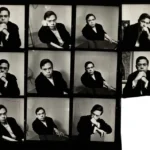
Main image: a multiple portrait of Guillermo Cabrera Infante, National Portrait Gallery in London

Other Articles

Criollismo crudo
Cabrera Infante: A Summery Interview – Part I


No Comment! Be the first one.