

By Professor Jason Wilson
Second instalment of an insightful critique of one of the most representative novels of the Latin American cannon. A commentary of an author who took his own borgesian idea and expanded it continentally with the help of French surrealism, freudianism and a precocious child-like approach to story telling. In Hopscotch, Julio Cortázar took an architectural blueprint by Borges and flung it almost violently across the Atlantic.
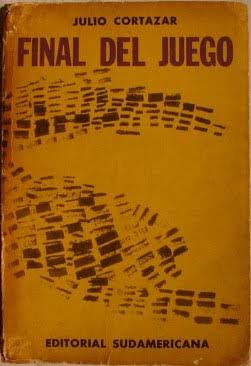
Oliveira’s problem derives from the fact that adults can no longer play games with a child’s nonchalance. The End of the Game defines Cortázar’s fictional world and implies the dull post-pubertal world of sexuality, work, loss of fantasy, self-consciousness and bad faith. To return to being a child motivates Oliveira to de-educate himself and rid his mind of the deadening bookish culture he acquired in order to become an adult intellectual, dismissing even his dream of being a poet and his belief in love. Having read too much allows Cortázar to coin his term for bad faith — the novel. His life pattern is summarized thus: ‘infancy suddenly ends and we fall into novels’ The non-verbal magic of infancy leads to the Fall into the fictions of adulthood. A novel is a pre-ordained script, a congealed view of the self, a predictable life. To break free of fiction becomes the imperative for author, character and reader — within a novel. But this break is sought in relation to an inner, non-verbal, non-literary contact with ‘the world under the eyelids that eyes turned inwards recognize and respect’. The novel epitomizes bad faith because it is the bourgeois literary genre and because Cortázar, like Oliveira, had read too many, acquiring a vicarious familiarity with life. He once confessed to Luis Harss that reading ‘probably denied me a good dose of vital experience’. Oliveira accuses himself of acting like a Conrad hero, like a Céline character; a friend identifies him with a phony Lautréamont, a ‘Maldoror porteño’ (A Maldoror = Lautréamont’s rebel poet = from the port of Buenos Aires).
Although Cortázar sometimes rejected his novel as autobiographical and, in interview with Picon Garfield, denounced Oliveira as a mediocre pseudo-intellectual, at this cultural disease level of over-reading we can bond Cortázar and Oliveira into a therapeutic relationship where one mirrors the other. Cortázar submitted his protagonist to his own search for some ‘absolute’ that would redeem him from despair and meaninglessness. Oliveira’s journey through the novel mirrors Cortázar’s: an exorcism of culture. Amazingly for a porteño intellectual, Cortázar had never been psychoanalysed — he admitted to Prego that he wrote El examen (‘The Exam’) in the late 1940s as self-analysis in conjunction with Freud’s complete works in Spanish. We can make the leap that Cortázar analysed his own bad faith, his over-culturalization, through Oliveira, his doppelganger.
In 1967 Cortázar wrote in Around the Day in Eighty Worlds: ‘I who write this also do not know how to change my life and remain as I was before’. Yet in 1978 in an interview with González Bermejo he confirmed that he still believed in Rimbaud’s ‘il faut changer la vie’. Why does this change in life still defy him? Could it be that both Cortázar and Oliveira were both over forty in 1960? Part of the problem is ageing.
In order to test himself through Oliveira and see if both can ‘cure themselves’. Cortázar locates the enemy as guilt — the guilt of having read too much, of not working, of not having lived intensely enough à la Rimbaud — and he must exorcize it. This guilt of having wasted his life originates with his literary attraction for Paris, Mecca of Culture, from a provincial Buenos Aires. But once in Paris its dream-glamour evaporates and both author and protagonist become aliens, météques in a grey city. Having seen through the veneer of Paris, Oliveira, a ‘self-conscious vagrant’, drops out and fills his days with guilty leisure; love affairs, café discussions and sauntering about the streets. But no work. Above all he talks; endless conversations that do not lead to a talking cure,
The novel could be narrated by Oliveira in the third person; he keeps a notebook and once wrote poems. It is as if he writes the novel as the reader reads it. But he is haunted by the authentic poets (Rimbaud, Artaud, Lautréamont) and cannot content himself with a mere novel for he is writing in order to change himself. Behind the compelling incidents and anecdotes of the first half of Hopscotch we can identify (or not) with a character who loathes his ‘rotten measurer of a university and enlightened man’, asphyxiated by what he calls his librarian’s prejudices, He wants to humiliate this culturalized part of himself, stub out the ‘stupid pride of the intellectual who thinks himself equipped to understand’, In order to de-sublimate himself he must turn himself inside out and look at the world through the eye of his arsehole.
Oliveira’s psychology is generated by being a selfloathing intellectual whose innate tendency has been to escape ‘human filth’ through books, ‘in some metaphysical river, naturally’. He is an idealist who has shockingly glimpsed the foul end-result in himself in the middle of his life of so much reading and talking about culture. In a discussion about The Tibetan Book of the Dead Oliveira quips ‘the Tibetan book for the dead’ but his earnest companions miss his lethal irony. For Oliveira, being an intellectual has landed him in a nightmare.
All the Club de la Serpiente discussions, all the literary quotes and allusions that froth out of Oliveira’s mouth confirm how deeply Culture has poisoned Cortázar’s protagonist, But in his de-education there are three escape hatches. The first is a strangely flattering view of Cortázar’s ‘primitive’ South American roots. Oliveira, unlike his Bohemian companions, still has access to an elemental brutal life outside Europe. Secondly, the women Oliveira chooses have not been contaminated by over reading (La Maga reads Galdés; Talita, encyclopaedias). These women can still experience truth: ‘Only Oliveira realized that La Maga leaned out every now and then on to those great terraces outside time that all of them had been seeking dialectically’. These women’s perceptions have not been codified and sullied in words, concepts and books for the source of authenticity is a ‘balbucearse’ , a babbling, a stammering. This balbuceo suggests the universal language of authenticity, a mantra or baby talk that only authentic art taps. The third escape involves much of the novel’s realistic plot and is simply the way Oliveira plunges into action before thought; he leaps without thinking in order to break out of his ‘paralytic’s terrible lucidity’ . Author, character and reader all leap out of a paralysing self-consciousness in a processnovel where nobody knows where they are going. Oliveira’s drama is cultural and historic: being stuck in himself, unable to change; ‘how tiring it is to be always oneself. Irretrievably’, everybody stuck in glass cases.
If Cortázar purifies his living a bad novel through his protagonist, he also traps his readers through his skill in writing realistic prose. He never lets his reader off the hook. Hopscotch opens with a ‘Tablero de direccién’ (Direction board) that with the dispensable chapters constituted the novel’s experimental allure in the 1960s. He offers two readings: he appears to despise the conventional novel reader who reads from page 1 to the end and appeals to intellectual snobs (and literary critics) who can follow his order, beginning with Chapter 73. But this snob reading has been undermined because the reader cannot get out of the novel: Chapter 131 sends you to 58 and 58 to 131, like a stuck record. Clearly Cortázar seeks a ‘new’ reader who questions reading itself. How to read has become the theme of the novel and is the same as saying, who am I? This clue is dropped by the avant-garde writer Morelli: ‘My book can be read any way you like’ which privileges the reader’s disponibilité and suggests that a work of art’s only value is its capacity to provoke whim or desire. Cortázar seeks a reader who also wants to change. But even the reader who agrees that change is crucial is actually reluctant to set out on a reading journey into his own bad faith. When Cortázar, through Morelli, divides readers into lectores hembras (passive readers) and lectores complices, he intended his accomplices to suffer. For this latter reader is forced to become an accomplice to Oliveira’s crime of over reading and inner death. In fact both types of reader coexist in every individual reader for he must first enjoy reading the novel as a realistic piece of fiction (i.e. confess his guilt) and then realize that fiction is a screen with an author on one side and the reader on the other, as if in analytic session. Art is not artifice but a ‘living bridge between man and man’. Real narrative first questions the author, then the reader, As Morelli wrote ‘there is no message, but messengers’. This kind of novel will be a ‘coagulant of lived experiences’ and will lure the reader deeper into trouble, chaos and life. The real character becomes the reader and his reluctance to change. Cortázar expressed this painful view of art in Around the Day in Eighty Worlds: ‘What did your admiration matter to Van Gogh? What he wanted was your complicity, that you would try to look as he was looking with your eyes skinned by a Heraclitean fire’. Cortázar wants his reader to suffer with him; he wants to make him ill and sick up his bad faith, not sit down and lose himself in fictions.
Chapter 21 exemplifies this new way of reading. Oliveira sits alone in a Latin-Quarter café reading René Crevel’s 1929 novel Êtes-vous fou?. Oliveira talks to this book as if Crevel still lives. He uses Crevel to criticize himself:
Tu sèmes des syllabes pour récolter des étoiles — Crevel
makes fun of me. One does what one can ~I answer.
Oliveira reads fiction to ‘mock himself’. Crevel diagnoses his vanity: he who wanted to sow syllables and be a poet, or find stars as a symbol of wisdom and literary glory. We see that Oliveira reads prose to judge himself. It is telling that Cortázar refused to publish his own poetry ‘because | feel less capable of judging myself through poetry than through prose’. Crevel winkles out his most secret vanities; that is how one becomes a lector complice. Thanks to Crevel Oliveira becomes conscious that he ‘pours out his bitterness in the suburbs’ (a Bohemian dropout), that he clings to stories (novels, fiction), that he hugs words (a cowardly logocentric poet). The intellectual’s disease: between Oliveira and Reality ‘grows a reedbed of words’. While reading Crevel Oliveira cries out to his lover La Maga ‘Ah, let me in, let me one day see what your eyes see’ but he remains stuck in his ‘egociencia’, his ‘conciencia’, terrified of changing. Reading a book has pushed Oliveira towards painful truth, ‘living things’.
Many marvellous chapters in Hopscotch involve the reader in Oliveira’s predicament. In Chapter 23 we suffer with Oliveira as he inexplicably sits out alone the sad avant-garde parody of a concert given by Berthe Trepat, herself a grotesque double of himself; in Chapter 28 we become accomplices to Oliveira’s perverse refusal to tell la Maga that her baby is dead; we are suspended with Talita on the plank in Chapter 41… but to describe the skill with which Cortázar seduces us into the realistic scenes in the novel would be to rewrite it a la Pierre Menard. But once we have enjoyed reading these chapters we must then submit to its ‘ferocious slap in the face’ and sink up to our necks, like Oliveira recalling Heraclitus, in our own shit (guilt) in order to ‘cure ourselves’. That is why the novelist, his protagonist and the reader all end the novel sitting on the windowsill. Did Oliveira leap out, go mad, commit suicide, become a bourgeois zombie or discover his love for his friends? The real test happens off-page, the book closed. Are you still willing to remain yourself or take a leap like Cortázar into the brotherhood of politics and away from solipsism and ivory-tower culture?
In Chapter 82 Morelli defines writing as a path to salvation: “To write is to draw my mandala and at the same time traverse it, to invent purification purifying oneself’ where the act of writing — the verb is in the infinitive — parallels the disciplined journey along the mandala. But Morelli deflates his pedantic confession with self-irony. This is the ‘task of a poor white shaman wearing nylon underpants’ . This sudden selfmocking is typically Cortázarian, so typical that this same ‘Morelli’ fragment appears in Cortázar’s working notebook (edited by Ana Maria Barrenechea) in the first person as an autobiographical intention.
Fiction as a substitute for psychoanalysis? In 1983 Cortázar told Prego that Oliveira’s most memorable trait is his need to ‘look at himself in a mirror that reflects him as he is and not feel sorry for himself. And attack himself, directly’. After so much self-attacking does Oliveira change? Does the reader change? In one sense all great novels change the reader — art opens you out to suppressed, barely glimpsed areas of desire, hurt, jealousy, memory, dream and experience. In Hopscotch this kind of reading-therapy has become its theme where writing and reading are restored to activities that do not specify pre-established finalities because the truth of the self resists words and culture and speaks as a balbuceo. Maybe writing (and reading) a novel like Hopscotch retraces Freud’s own experience of analysing himself?
Jason Wilson is an Emeritus Professor at University College, London. He has published numerous books, including Octavio Paz. A study of his Poetics (CUP, 1979, into Spanish in 1980, reprinted in 2009) and Octavio Paz (Twayne, 1986), Jorge Luis Borges (Reaktion Books and Chicago University Press, 2006, translated into Portuguese 2009, Chinese, 2011 and Turkish 2011), A Companion to Pablo Neruda. Evaluating the Poetry (Tamesis, 2008 and paperback, 2014), He has edited and translated Alexandre von Humboldt’s Personal Narrative of a Journey to the Equinoctial Regions of the New Continent (Penguin Classics, 1995), His most recent publication is Living in the Sound of the Wind. A Personal Quest for W. H. Hudson, Naturalist and Writer from the River Plate (Constable, 2015, paperback 2016, into French 2018 and into Spanish, 2023, with Ateneo). He spends his time between London and Buenos Aires. He is currently writing on how he became a hispanist.


Cartografías sentimentales II: Berlín
Julio Cortázar: The Drama of Reading I



No Comment! Be the first one.