

By Rafael Tsao
It is a tale of two cities but not of London and Paris or Bogotá and Medellín. Our Shanghai contributor writes of the profound dislike that exists between his city of birth and Beijing. It is also a story of the historical, cultural and linguistic nuances that make up that intangible concept of identity in the global reality of our days. This is the first of two articles
If Beijing, BJ, stands for blowjob then Shanghai, SH, does it for simmering hot.
Both are equally shitty.
Beijing: Every word in every human language invented to denote “lousiness”, “classlessness”, “bigotry”, “rusticity” or “pretentious machismo” pertains to the least cool city in the known universe. It is a place parading its own behemoth made of caste, collectivism, totalitarianism plus an incongruous celestial illusion which is as old as history itself.
Shanghai: Its peddling “achievement” is being home to the highest number of cafes worldwide, a sort of niche of its self-proclaimed cosmopolitanism. Nonetheless, it is hardly something to boast about only if we compare it with Tokyo or Delhi -the latter doesn’t really count because in India drinking coffee is still a cultural anathema- since Shanghai is the third most populated metropolis on the planet.
Both cities are notorious for their xenophobia against the rest of the country. Xenophobic scandals involving Beijingers and Shanghainese occasionally feature in the country’s headlines as a form of escape valve, and a reason to vent, for those who feel systematically discriminated against. No doubt, Beijingers and Shanghainese do enjoy advantages in many ways just because of their birthplace. But we are talking about a country where everything is politicised. The Party needs some of their preferred “people” to be shielded from the fury from those less favoured.
Sometimes this notion of a shared siege mentality endears these two great rivals to each other but their perspective regional crusades share no joined vision at all. The difference between beijingness and shanghainess is, nevertheless, made more by facets than by an imposed narrative of Tradition vs Westernization. Political activism has never been part of the Confucian tradition but nothing has stopped Beijing from being the hotbed of some of the most influential intellectual revolts in the country’s modern epoch. Whilst beneath Shanghai’s bourgeois glitz there is a tacit apartheid separating the expat enclave and its local elite milieu from the silent Chinese majority. A population not too much less “Chinese” than their northern foe.
What makes a Beijinger a Beijinger is a quasi religious fundamental ghost: he couldn’t stand any outlander belittling his Forbidden City as if he was historically obliged to guard some utmost sacred culture heritage for the superlative bliss of being allow to dwell at the centre of civilization. Historical myth permeates every vein of Beijing, even those most stupid toponyms bear some legends to which its modern inhabitants practise with genuine piety. “This is left by the ancestors!” One must be an archaeological nerd to be qualified as a decent Beijinger, oh so it seems.
In most cases this syndrome of collective atavism -of ancestry and heritage- serves as the best mental opium to tame the populace. But too much history can backfire. Because history oozes an irresistible seduction of pomposity, grandeur and even heroism, if you are so inclined to such sentiments. Those aforementioned intellectual revolts, two of the most famous occurred in 1919 and 1989, were instigated by certain migrant intellectuals but soon received major local support from all walks of lives: students, workers, merchants, publicans, men, women, boys, girls. The average Beijingers made the majority of the death toll of 1989 for their voluntary solidarity with students defending Tiananmen on that fateful early June night.
Conversely, their Shanghainese counterparts were swiftly divided and ruled. Workers from major state-owned enterprises were organised to monitor and deter their discontent colleagues as well as to isolate students. Students soon gave up. Nothing too ugly. Few low key incidents met with death sentences though. I personally heard a story from one of my primary school teachers that a mentally unstable kid burnt a train from Beijing on the noon of June 4th and later got executed, the first recorded capital punishment following June 4th in the entire country. Shanghai bureaucrats impressed a then beleaguered Deng Xiaoping for their smooth operation. One of them was Zhu Rongji, who premiered the country in the late 1990s.
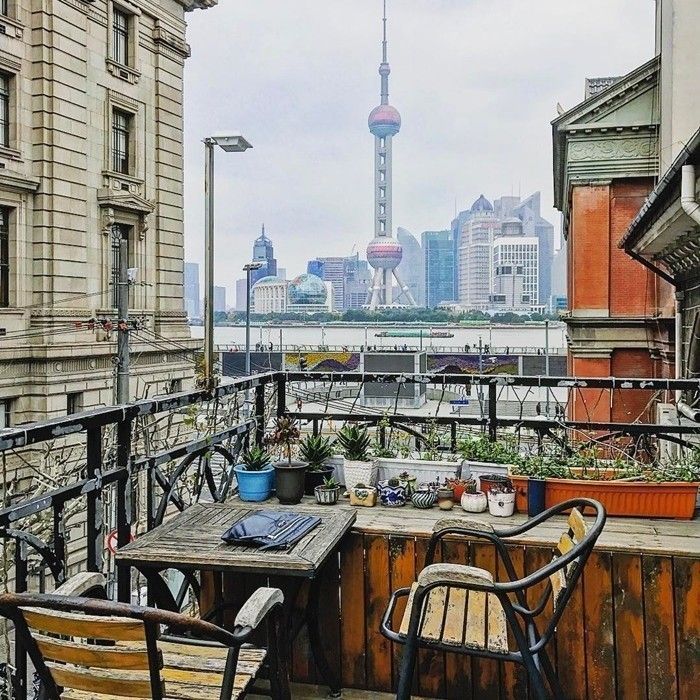
In general, Shanghaineses see things from a seemingly more worldly and individualistic perspective from wherein they reach the conclusion that imaging themselves as accomplices of the Leviathan is the sweetest ideal out there. An ingrained distrust concerning immigrants (ironically most Shanghainese are descendants of migrants themselves) leaves them exposed to this epidemic illusion of depending on their local government or on certain politicians, who in their collective paranoia are somewhat exercising a Shanghai Exceptionalism in their favour because of the city’s financial importance. From a close register, I have sensed a growing fascist tendency in the city’s native working class base since I learned what the word fascist actually means. Therefore I was somewhat pleased to see all their sweet dreams transformed into bitter nightmares in the pandemic year of 2022. Shanghai post 2022 is a sour and disillusioned city.
One thing deeply infuriates Shanghainese about Beijing is the officially emboldened marginalisation and caricature campaign against Shanghainese dialect, a dialect barely intelligible for monolingual Mandarin speakers. In all fairness, it is not Beijingers themselves smearing against Shanghainese dialect but the you-know-who overseeing matters from Beijing. Anyway, Shanghainese or Mandarin? This seems to be a quite serious question for many. Of course there has never been any law prohibiting Shanghainese from speaking Shanghainese. However all public services and schools in Shanghai are strictly Mandarin speaking. The most ludicrous case is the Shanghai Metro System. All staff there are exclusively native Shanghainese but if you speak Shanghainese to them those robots would only respond in nonchalantly polite Mandarin, sometimes with broad Shanghainese accent. They speak the language they know best at the behest of Beijing: obedience.
The etymological root of this very term “Mandarin” was “满大人” or Señor Manchúno, from its onset Mandarin was a language imposed by los conquistadores in spite of the fact that linguistically it belongs to the conquered. In the past people used to nickname “Mandarin” as “官话”, lengua burocrática. The Party, upon their takeover in 1949 and in their usual totalitarian perspicacity, immediately revised the detested “Mandarin” to a far more politically correct-sounding “Putonghua” aka lengua común. This left the Shanghainese with no intention whatsoever to boycott the language from Beijing anymore.
Putonghua was an Esperanto invented for sheer political aspirations by a group of revolutionaries unable to imagine their nationhood other than “Unification”. But the plain fact is Putonghua has its phonological foundation laid upon Beijingese. The Beijingese -you might allow me another small diatribe- is pervaded with rhotacization (i.e. the uses of “r” in speech). Basically every word can be suffixed by a ‘r’ and not your Spanish ‘ere’, but the American ‘r’; it is a case of perverse phonetic reductionism: vowels in the middle of a word usually end up swallowed thus engendering certain amount of frivolity and even vulgarity in the speech. To certain ears it is an outrageous nasal sound that gives the impression that all Beijingers might have been born with rhinitis. And the final nail is that Beijingers hasta la fecha siguen usando el “您” usted [nín] instead of the informal “你” tú [ni]. The most metaphorical difference between Beijingnese and Shanghainese dialects lies in cadence.

The political implication behind homogenising languages in a country ridiculously rich in dialects is too pronounced and deserves to be further analysed in a subsequent article. Suffice to say that probably Beijingers don’t see the Putonghua hegemony as a victory of theirs but Shanghainese definitely take it as another oppression from that hated city.
Rafael Tsao is a Shanghainese young poet, cinema critic as well as a translator. He is Perro Negro’s exclusive correspondent in Shanghai and a writer commenting on the myriad intersects between art and culture.

Other Articles

Borges and the Obedience of Time
¿Sanciones o verdades crudas?





No Comment! Be the first one.