

By Hernán B. Aliaga
Jürgen Habermas -a survivor of the second generation of Frankfurt School- is a sucessor of Max Webber and his theory of Rationalisation which focuses on the replacements of traditions, values and emotions as the real motivators for societal behaviour. This brief essay deals on how the efficiency and utilitarianism of advance capitalism has now also permeated and colonised our emotional lives
What if I told you that many of the things we consider normal today —like measuring the time we spend with a loved one because “we have too much to do” or feeling guilty for idling without being productive— are symptoms of a silent distortion in the way we live collectively? This distortion is what Jürgen Habermas, in his theory of communicative action, calls The Colonisation of our Lifeworld.
Habermas distinguishes between two major spheres that coexist in modern societies: The System and our Lifeworld. The System encompasses the market and public administration. It doesn’t operate through dialogue, but rather through impersonal means such as money and power. Its rationality is instrumental: it seeks efficiency, control and calculation. Within The System actions are not justified by shared reasons but by their capacity to fulfill functions.
Lifeworld, on the other hand, is the space where we share meanings: everyday language, emotional bonds, moral norms, culture. It is there where we learn to be human, to understand and be understood. Its logic is communicative: orientated not toward success but toward understanding. It is the realm where we deliberate about ends, about what kind of lives are worth living.
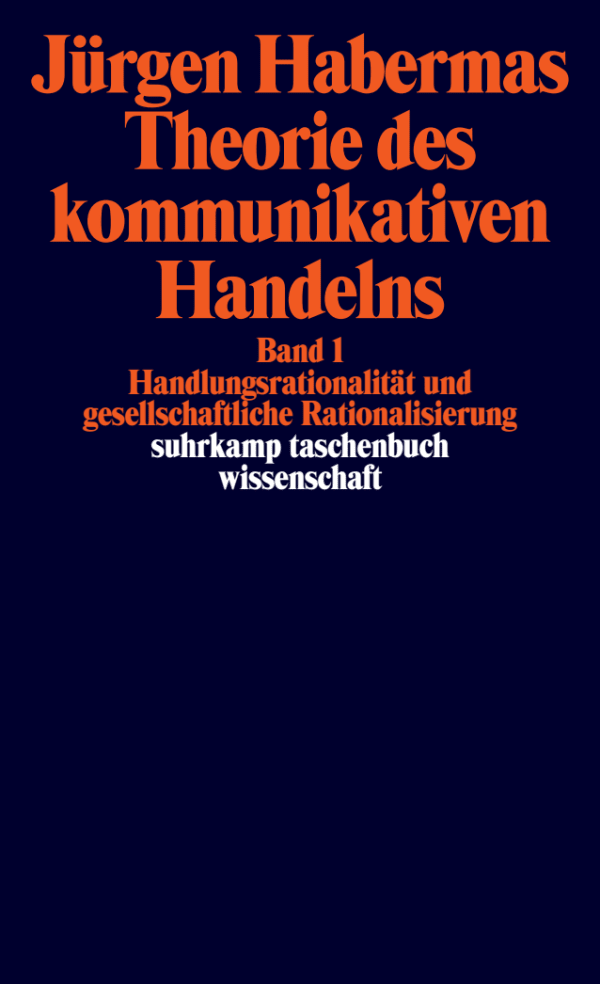
In current societies, however, The System —which was born to efficiently organise only certain aspects of life— has began to extend its logic into areas which do not belong to it. Efficiency replacing understanding, administration subordintaing care, and programming taking over dialogue. This functional invasion of our Lifeworld by The System is what Habermas calls “Colonisation.”
Examples abound: when a doctor doesn’t look at you and follows a protocol with timed procedures; when schools replace civic education with the development of “skills” and “employability”; when politics becomes data management rather than deliberation about the common good; When even resting or reading is justified by its contribution to productivity.
Yes, everything starts to work but no one talks of the reasons why anymore.
This transformation may seem modern and harmless but for Habermas it is profoundly alarming. Because a society that no longer reflects collectively on its goals and no longer discusses what it means to live well, is a society that has surrendered its soul to the impersonal logic of The System. And a democracy without dialogue becomes just a mere form of top-down management.
To colonise our Lifeworld is to replace understanding with administration, coexistence with programming and education with training. It is to relegate the study of humanities for “lack of utility.” To treat education as an investment and time as currency. And when this becomes normalised, we are no longer interlocutors in a shared project but cogs in a machine that perform functions without questioning their meaning.
Habermas does not blame individuals for this dynamic: colonisation is structural, the result of the functional hypertrophy of a necessary but misguided system. The goal is not to abolish it, but to contain it. And that requires a collective will to preserve and regenerate those spaces where it is still possible to talk, to care, to deliberate and to spend time together.
Because maybe in the simple act of resisting to live as if everything must have a purpose, there is already a silent form of decolonisation.
Hernán B. Aliaga is a writer and a social philosopher. He is a former lecturer at Pontificia Universidad Católica, Peru. He has been educated between Lima and Berlin where he now lives and is working on his doctoral thesis on social theory. He is an active commentator on social media. This is the first of a series of articles on social philosophy for Perro Negro in English. Most have already posted in Spanish in his Instagram page. You can also follow him on https://hernanbaliaga.substack.com/ and TikTok
Main image: one the Six Clocks by Konstantin Grcic, Wikimedia


Aceptémoslo, el rock llegó a su techo creativo
Un rugir melódico e inteligente



No Comment! Be the first one.