

It would have been nothing less than a blasphemy not marking the centenary of Kafka’s death. Here, in the first of three articles, we wish to remind ourselves how his writing is infused of an absurd sense of humour and of his mordant critique of power. When reading Kafka your are also exposed to the paradoxical nature of religious morality in a godless world
“Kafka is one of the great authors of world literature. For me he is the first of this century. I was at James Joyce’s centenary events and when someone compared him to Kafka I thought it was a blasphemy. Joyce is important within the English language and its infinite possibilities but he is untranslatable. On the other hand, Kafka wrote in a very simple and delicate German. He cared about the work, not the fame, that is undoubtedly the case. Kafka, the dreamer who did not want his dreams to be known, is now part of that universal dream that is memory. We know what his dates are, what his life is, that he is of Jewish origin and so on, all that will be forgotten, but his stories will continue to be told.”
Jorge Luis Borges.
Excerpt from Un sueño eterno, El País, 3rd July 1983.
On Parables
Many complain that the words of the wise are always merely parables and of no use in daily life, which is the only life we have. When the sage says: “Go over,” he does not mean that we should cross over to some actual place, which we could do anyhow if the labor were worth it; he means some fabulous yonder, something unknown to us, something too that he cannot designate more precisely, and therefore cannot help us here in the very least. All these parables really set out to say merely that the incomprehensible is incomprehensible, and we know that already. But the cares we have to struggle with every day: that is a different matter.
Concerning this a man once said: Why such reluctance? If you only followed the parables you yourselves would become parables and with that rid yourself of all your daily cares.
Another said: I bet that is also a parable.
The first said: You have won.
The second said: But unfortunately only in parable.
The first said: No, in reality: in parable you have lost.
Pekin and the Emperor
If from such appearances any one should draw the conclusion that in reality we have no Emperor, he would not be far from the truth. Over and over again it must be repeated: There is perhaps no people more faithful to the Emperor than ours in the south, but the Emperor derives no advantage from our fidelity. True, the sacred dragon stands on the little column at the end of the village, and ever since the beginning of human memory it has breathed out its fiery breath in the direction of Pekin in token of homage–but Pekin itself is far stranger to the people in our village than the next world. Can there really be a village where the houses stand side by side, covering all the fields for a greater distance than one can see from our hills, and can there be dense crowds of people packed between these houses day and night? We find it more difficult to picture such a city than to believe that Pekin and its Emperor are one, a cloud, say, peacefully voyaging beneath the sun in the course of the ages.
Now the result of holding such opinions is a life on the whole free and unconstrained. By no means immoral, however; hardly ever have I found in my travels such pure morals as in my native village. But yet a life that is subject to no contemporary law, and attends only to the exhortations and warnings which come to us from olden times. . .
This attitude is certainly no virtue. All the more remarkable is it that this very weakness should seem to be one of the greatest unifying influences among our people; indeed, if one may dare to use the expression, the very ground on which we live. To set about establishing a fundamental defect here would mean undermining not only our consciences, but, what is far worse, our feet.
Paradise
The expulsion from Paradise is in its main significance eternal: Consequently the expulsion from Paradise is final, and life in this world irrevocable, but the eternal nature of the occurrence (or, temporally expressed, the eternal recapitulation of the occurrence) makes it nevertheless possible that not only could we live continuously in Paradise, but that we are continuously there in actual fact, no matter whether we know it here or not.
Why do we lament over the fall of man? We were not driven out of Paradise because of it, but because of the Tree of life, that we might not eat of it.
We are sinful not merely because we have eaten of the Tree of Knowledge, but also because we have not yet eaten of the Tree of Life. The state in which we find ourselves is sinful, quite independent of guilt.
We were fashioned to live in Paradise, and Paradise was destined to serve us. Our destiny has been altered; that this has also happened with the destiny of Paradise is not stated.
We were expelled from Paradise, but Paradise was not destroyed. In a sense our expulsion from Paradise was a stroke of luck, for had we not been expelled, Paradise would have had to be destroyed.
God said that Adam would have to die on the day he ate of the Tree of Knowledge. According to God, the instantaneous result of eating of the Tree of Knowledge would be death; according to the serpent (at least it can be understood so), it would be equality with God. Both were wrong in similar ways. Men did not die, but became mortal; they did not become like God, but received the indispensable capacity to become so. Both were right in similar ways. Man did not die, but the paradisiacal man did; men did not become God, but divine knowledge.
He is a free and secure citizen of the world, for he is fettered to a chain which is long enough to give him the freedom of all earthly space, and yet only so long that nothing can drag him past the frontiers of the world. But simultaneously he is a free and secure citizen of Heaven as well, for he is also fettered by a similarly designed heavenly chain. So that if he heads, say, for the earth, his heavenly collar throttles him, and if he heads for Heaven, the earthly one does the same. And yet all the possibilities are his, and he feels it, more, he actually refuses to account for the deadlock by an error in the original fettering.
Since the Fall we have been essentially equal in our capacity to recognize good and evil; nonetheless it is just here that we seek to show our individual superiority. But the real differences begin beyond that knowledge. The opposite illusion may be explained thus: nobody can remain content with the mere knowledge of good and evil in itself, but must endeavor as well to act in accordance with it. The strength to do so, however, is not likewise given him, consequently he must destroy himself trying to do so, at the risk of not achieving the necessary strength even then; yet there remains nothing for him but this final attempt. (That is moreover the meaning of the threat of death attached to the Tree of Knowledge; perhaps too it was the original meaning of natural death.) Now, faced with this attempt, man is filled with fear,; he prefers to annul his knowledge of good and evil (the term, “the fall of man,” may be traced back to that fear); yet the accomplished cannot be annulled, but only confused. It was for this purpose that our rationalizations were created. The whole world is full of them, indeed the whole visible world is perhaps nothing more than than the rationalization of a man who wants to find peace for a moment. An attempt to falsify the actuality of knowledge, to regard knowledge as a goal still to be reached.
Leopards in The Temple
Leopards break into the temple and drink to the dregs what is in the sacrificial pitchers; this is repeated over and over again; finally it can be calculated in advance, and it becomes a part of the ceremony.
The Sirens
These are the seductive voices of the night; the Sirens, too, sang that way. It would be doing them an injustice to think that they wanted to seduce; they knew they had claws and sterile wombs, and they lamented this aloud. They could not help it if their laments sounded so beautiful.
Abraham
Abraham’s spiritual poverty and the inertia of this poverty are an asset, they make concentration easier for him, or, even more, they are concentration already –by this, however, he loses the advantage that lies in applying the powers of concentration.
Abraham falls victim to the following illusion: he cannot stand the uniformity of this world. Now the world is known, however, to be uncommonly various, which can be verified at any time by taking a handful of world and looking at it closely. Thus this complaint at the uniformity of the world is really a complaint at not having been mixed profoundly enough with the diversity of the world.
I could conceive of another Abraham for myself–he certainly would have never gotten to be a patriarch or even an old-clothes dealer–who was prepared to satisfy the demand for a sacrifice immediately, with the promptness of a waiter, but was unable to bring it off because he could not get away, being indispensable; the household needed him, there was perpetually something or other to put in order, the house was never ready; for without having his house ready, without having something to fall back on, he could not leave this the Bible also realized, for it says: “He set his house in order.” And, in fact, Abraham possessed everything in plenty to start with; if he had not had a house, where would he have raised his son, and in which rafter would he have stuck the sacrificial knife?
This Abraham–but it’s all an old story not worth discussing any longer. Especially not the real Abraham; he had everything to start with, was brought up to it from childhood–I can’t see the leap. If he already had everything, and yet was to be raised still higher, then something had to be taken away from him, at least in appearance: this would be logical and no leap. It was different for the other Abrahams, who stood in the houses they were building and suddenly had to go up on Mount Moriah; it is possible that they did not even have a son, yet already had to sacrifice him. These are impossibilities, and Sarah was right to laugh. Thus only the suspicion remains that it was by intention that these men did not ready their houses, and– to select a very great example–hid their faces in magic trilogies in order not to have to lift them and see the mountain standing in the distance.
But take another Abraham. One who wanted to perform the sacrifice altogether in the right way and had a correct sense in general of the whole affair, but could not believe that he was the one meant, he, an ugly old man, and the dirty youngster that was his child. True faith is not lacking to him, he has this faith; he would make the sacrifice in the right spirit if only he could believe he was the one meant. He is afraid that after starting out as Abraham with his son he would change on the way into Don Quixote. The world would have been enraged at Abraham could it have beheld him at the time, but this one is afraid that the world would laugh itself to death at the sight of him. However, it is not the ridiculousness as such that he is afraid of–though he is, of course, afraid of that too and, above all, of his joining in the laughter–but in the main he is afraid that this ridiculousness will make him even older and uglier, his son even dirtier, even more unworthy of being really called. An Abraham who should come unsummoned! It is as if, at the end of the year, when the best student was solemnly about to receive a prize, the worst student rose in the expectant stillness and came forward from his dirty desk in the last row because he had made a mistake of hearing, and the whole class burst out laughing. And perhaps he had made no mistake at all, his name really was called, it having been the teacher’s intention to make the rewarding of the best student at the same time a punishment for the worst one.
Alexander The Great
It is conceivable that Alexander the Great, in spite of the martial successes of his early days, in spite of the excellent army that he had trained, in spite of the power he felt within him to change the world, might have remained standing on the bank of the Hellespont and never have crossed it, and not out of fear, not out of indecision, not out of infirmity of will, but because of the mere weight of his own body.
The Vulture
A vulture was hacking at my feet. It had already torn my boots and stockings to shreds, now it was hacking at the feet themselves. Again and again it struck at them, then circled several times restlessly round me, then returned to continue its work. A gentleman passed by, looked on for a while, then asked me why I suffered the vulture. “I’m helpless,” I said. “When it came and began to attack me, I of course tried to drive it away, even to strangle it, but these animals are very strong, it was about to spring at my face, but I preferred to sacrifice my feet. Now they are almost torn to bits.” “Fancy letting yourself be tortured like this!” said the gentleman. “One shot and that’s the end of the vulture.” “Really?” I said. “With pleasure,” said the gentleman, “I’ve only got to go home and get my gun. Could you wait another half hour?” “I’m not sure about that,” said I, and stood for a moment rigid with pain.
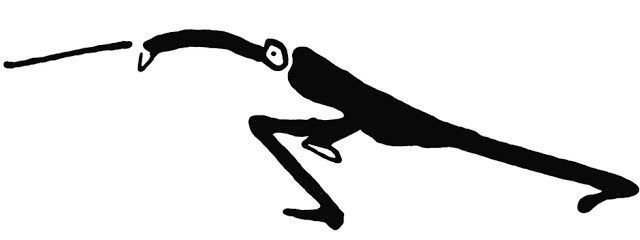
Then I said: “Do try it in any case, please.” “Very well,” said the gentleman, “I’ll be as quick as I can.” During this conversation the vulture had been calmly listening, letting its eye rove between me and the gentleman. Now I realized that it had understood everything; it took wing, leaned far back to gain impetus, and then, like a javelin thrower, thrust its beak through my mouth, deep into me. Falling back, I was relieved to feel him drowning irretrievably in my blood, which was filling every depth, flooding every shore.
The Savages
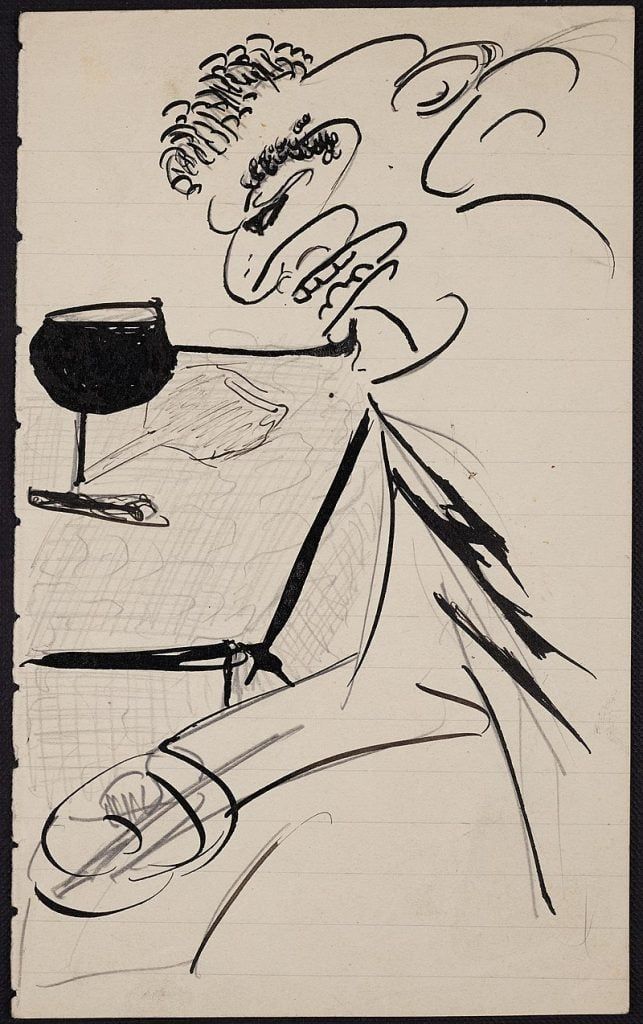
Those savages of whom it is recounted that they have no other longing than to die, or rather, they no longer have even that longing, but death has a longing for them, and they abandon themselves to it, or rather, they do not even abandon themselves, but fall into the sand on the shore and never get up again–those savages I much resemble, and indeed I have fellow clansmen round about, but the confusion in these territories is so great, the tumult is like waves rising and falling by day and by night, and the brothers let themselves be borne upon it. That is what, in this country, is called “giving someone a leg up”; everyone here is always ready with such help. Anyone who might collapse without cause and remain lying on the ground is dreaded as though he were the Devil, it is because of the example, it is because of the stench of truth that would emanate from him. Granted, nothing would happen; one, ten, a whole nation might very well remain lying on the ground and nothing would happen; life in all its might would go on just the same; the attics are still chockablock with flags that were never unfurled; this barrel organ can play only one tune, but it is eternity in person that turns the handle. And yet the fear! How people do always carry their own enemy, however powerless he is, within themselves.
The Building of the Temple
Everything came to his aid during the construction work. Foreign workers brought the marble blocks, trimmed and fitted to one another. The stones rose and placed themselves according to the gauging motions of his fingers. No building ever came into being as easily as did this temple–or rather, this temple came into being as a temple should. Except that, to wreak a spite or to desecrate or destroy it completely, instruments obviously of a magnificent sharpness had been used to scratch on every stone–from what quarry had they come?–for an eternity outlasting the temple, the clumsy scribblings of senseless children’s hands, or rather the entities of barbaric mountain dwellers.
The Coming of the Messiah
The Messiah will come as soon as the most unbridled individualism of faith becomes possible–when there is no one to destroy this possibility and no one to suffer its destruction; hence the graves will open themselves. This, perhaps, is Christian doctrine too, applying as much to the actual presentation of the example to be emulated, which is an individualistic example, as to the symbolic presentation of the resurrection of the Mediator in the single individual.
The Messiah will come only when he is no longer necessary; he will come only on the day after his arrival; he will come, not on the last day, but on the very last.
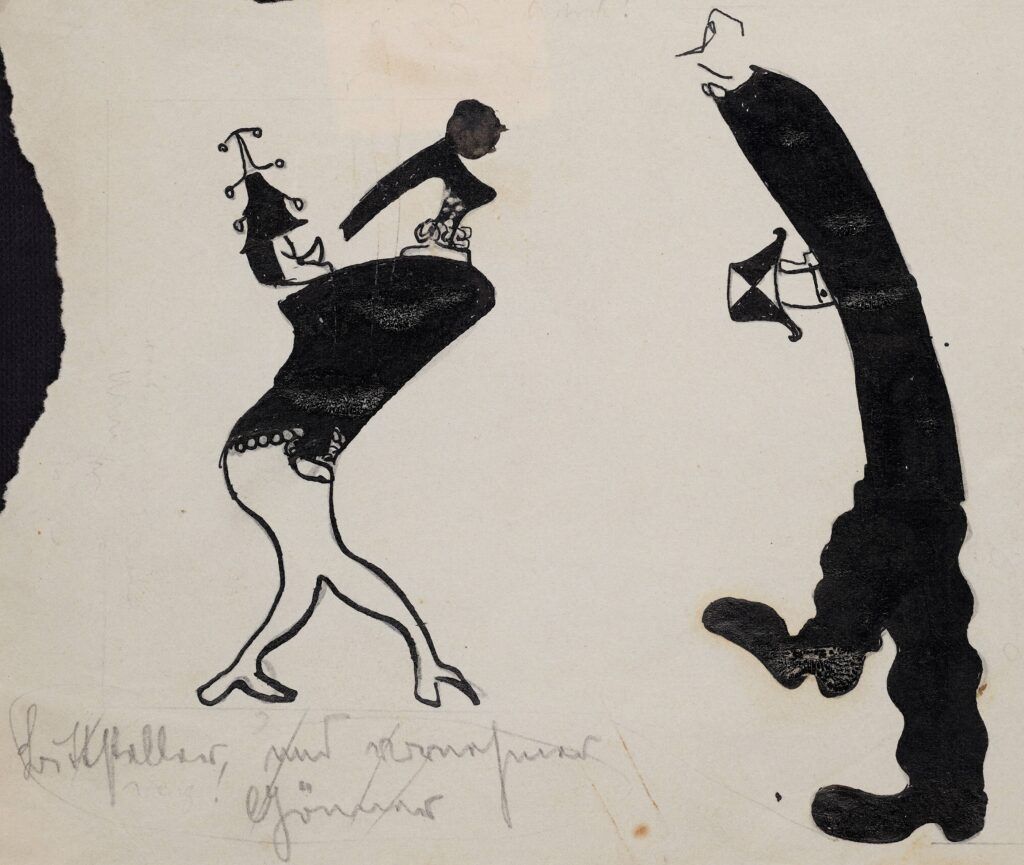
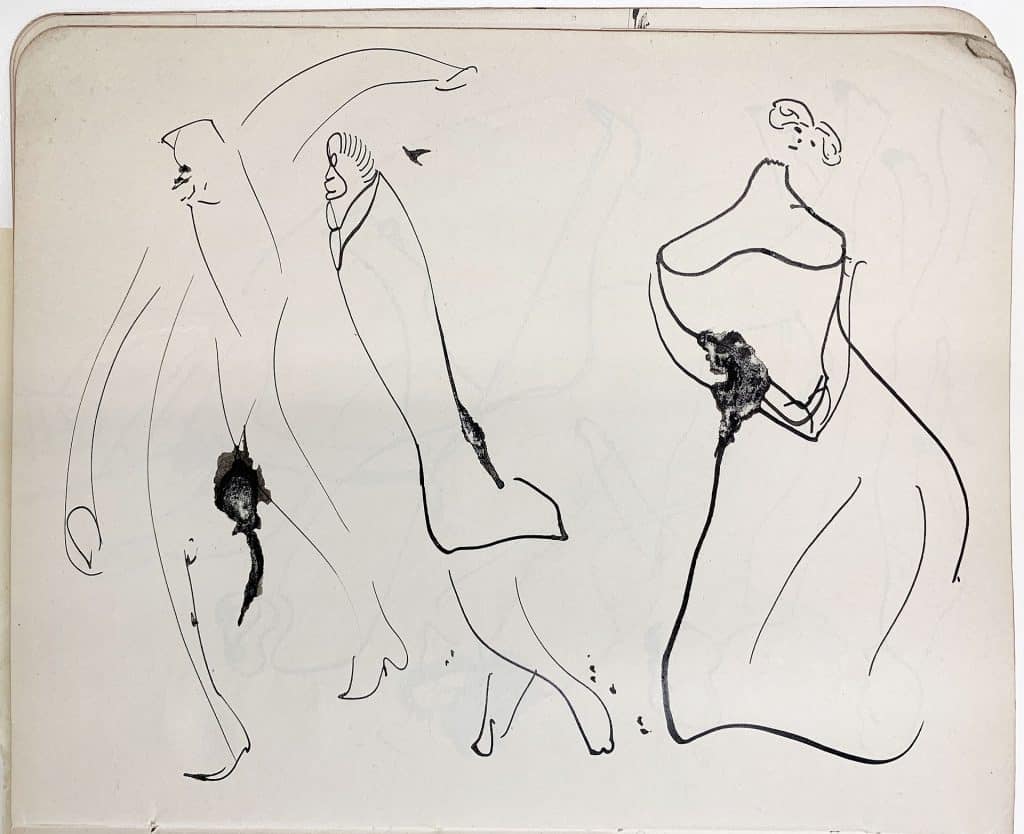
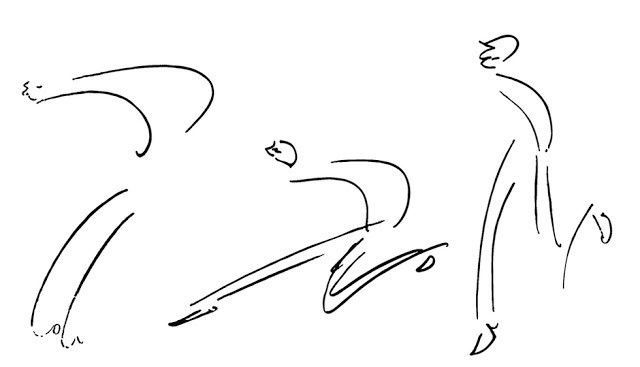
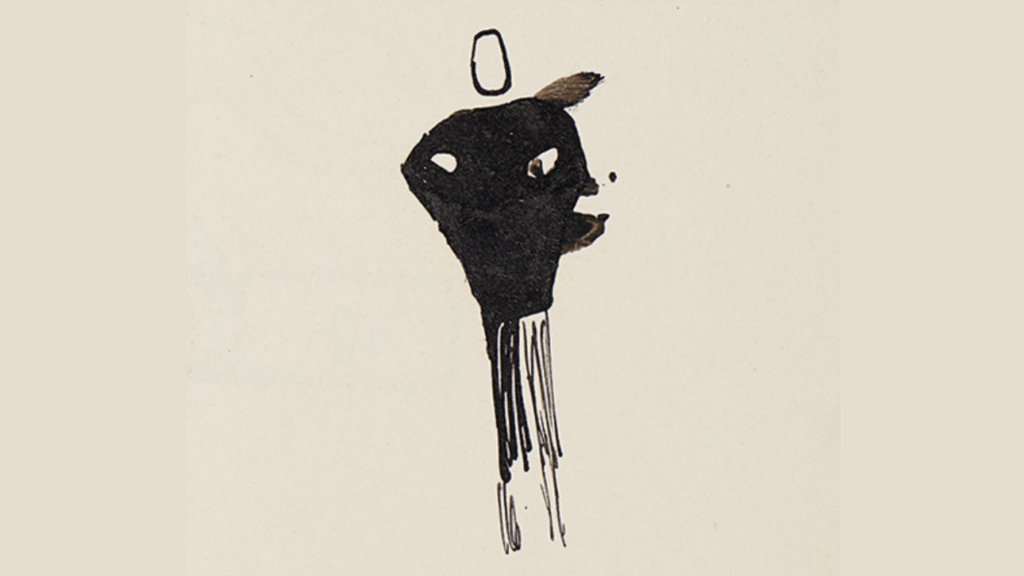
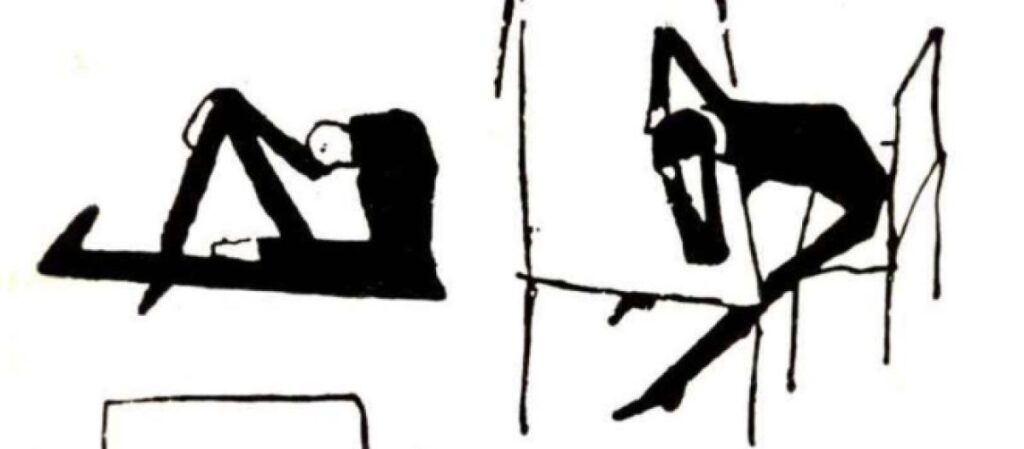
Franz Kafka did not date or title all his drawings. However the list of those used for this note is, in appearing order: The Beggar and the Elegant Man, 1914; Reunion 1918; Three Runners 1912; Directors 1920; Fencing 1917; The Drunk 1919; Figures 1920

Other Articles
Describir la tormenta: Neutrino, cuaderno de navegación
Crónicas de M IX: vencer no era mi guerra



No Comment! Be the first one.