

By Adam Feinstein
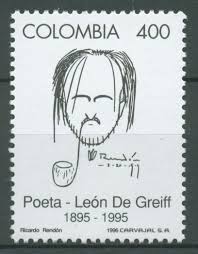
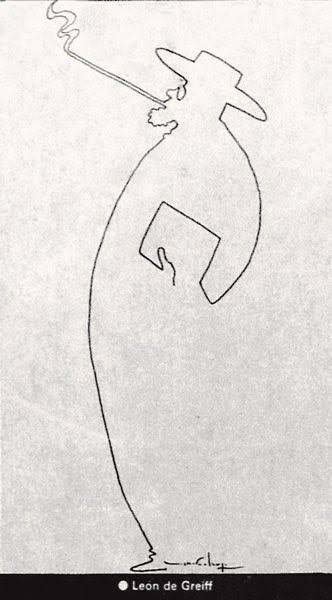
It is no exaggeration whatsoever to declare that the verses and poetic images of León de Greiff are truly unique not only within the rich landscape of Latin American poetry of the last century but of poetry in general anywhere in the world. These seven poems are an exclusive advance of the already anticipated translation in verse that Adam Feinstein is currently completing of this extraordinary but still not very well known poet beyond the borders of his native Colombia
Cancioncilla 1
Quise una vez y para siempre
-yo la quería desde antaño-
a esa mujer, en cuyos ojos
bebí mi júbilo y mi daño.
Quise una vez -nunca así quise
ni así querré, como así quiero-
a esa mujer, en cuyo espíritu
fundí mi espíritu altanero.
Quise una vez y desde nunca
-ya la querré y hasta que muera-
a esa mujer, en cuya boca
gusté -otoñal- la Primavera.
Quise una vez -nadie así quiso
ni así querrá, que es arduo empeño-
a esa mujer, en cuyo cálido
regazo en flor anclé mi ensueño.
Quise una vez -jamás la olvide
vivo ni muerto- a ésa mujer,
en cuyo ser de maravilla
remorí para renacer.
Y esa mujer se llama… Nadie,
nadie lo sepa -ella sí y yo-.
Cuando yo muera, digas -solo-
quien amara como él amó?
Ditty 1
I loved once and forever.
I loved her from many years ago,
that woman in whose eyes
I drank all my joy and sorrow —
Yes, I loved once. Never had I loved like that before,
nor will I love again, as I do now,
that woman on whose spirit
I forged my own haughty brow —
I loved once, and never again.
I loved her and will until I die,
that woman on whose lips
I tasted the spring, in my late-autumn. I
loved once. No one has loved like me,
and never will (it takes too much effort). That
woman, who anchored my dreams
in her hot, burgeoning lap.
I loved her once, that woman
— and will never forget her, alive or dead.
It was in her magnificent being
that I died twice to be born again —
And that woman’s name is —
No one will know, no one — just she and me.
When I die, just say one thing:
who will ever love like he?
Cancioncilla 2
Tú coronas mis quince lustros
con el cíngulo de tus brazos,
con el cíngulo de tus muslos,
con el perfume de tus labios,
con el éxtasis de tu júbilo
-cabrilleante por los lagos
auriendrinos, hondos carbundos-.
Con la tersura de tus manos,
con el ardor de tu combusto
tesoro en flor, que orna melado
toisón en rizos: el refugio
fragante, que al híspido fauno
tú le donas, -intercolumnio-:
oasis tibio entre alabastros.
Tú coronas mis quince lustros
con el hechizo de tus labios;
con el cíngulo de tus muslos,
con el cíngulo de tus brazos,
con tus fulgentes ojos rútilos,
con tus besos trémulos, ávidos,
-ora lustrales, ora lúbricos…-
Con la tersura de tus manos,
con tu voz rauca en el susurro,
con tus ímpetus inexhaustos,
con tus anhelos sitibundos
que el corazón hinchente: heraldos
de los mis goces y los tuyos,
-nuestra embriaguez y nuestro gaudio-.
Con el cíngulo de tus muslos,
con el cíngulo de tus brazos,
con el prodigio intercolumnio
con el regusto de tus labios…
Tú coronas mis quince lustros
con el brillo de tus ojazos,
-gémulas de móvil mercurio-.
Con tu voz grave, con tu osado
corazón fiero, con tu iluso
férvido ensueño, con tu claro
zahareño espíritu agudo.
Con el oreo de tu cálido
sexual exhálito y efluvio,
y prístino efluvio y exhálito.
con tu severo rictus duro,
con tu sonrisa en sobresalto,
con tu silencio o tu murmurio,
-tu pasional mezzo-soprano
que se asordina en el connubio…-
Con el cíngulo de tus brazos,
con el cíngulo de tus muslos…
con la caricia de tus manos,
con el éxtasis de tu júbilo,
con el éxtasis de mi gaudio,
con nuestros éxtasis en uno,
con el embrujo de tus labios,
coronaste mis quince lustros
y continúas coronándolos…
Ditty 2
You crown my 75 years
with the girdle of your arms,
with the girdle of your thighs,
with the perfume of your lips,
with the ecstasy of your joy
(shimmering over deep
lakes of gilded flame).
With the smoothness of your hands,
the ardour of your burning
treasure in bloom, decorated
by the curls of a honey-coloured Golden Fleece:
a fragrant refuge. You offer the faun, stiff and hairy,
a warm, moist oasis between
your shapely alabaster columns.
You crown my 75 years
with the enchantment of your lips,
with the girdle of your thighs,
with the girdle of your arms,
with the brilliance of your dazzling eyes,
with your quivering, greedy kisses,
now pure, now lustful …
With the smoothness of your hands,
your voice, a raucous whisper,
your tireless urges,
your thirsty desires
that swell the heart. heralding
my pleasures and yours,
our joyous intoxication.
With the girdle of your thighs,
with the girdle of your arms,
the marvel between your columns,
the aftertaste on your lips …
You crown my 75 years
with the glow of your wide eyes,
two darting gemmules of quicksilver.
With your solemn voice, your bold,
savage heart, your fantasies,
seething in their innocence,
your bright spirit, sharp and unbridled,
the breathless panting,
your hot, sexual sighs,
your pristine, sighing sex.
With your severe, harsh rictus,
your frightened smile,
your silence, your murmuring,
your passionate mezzo-soprano moans,
muted in marriage …
With the girdle of your arms,
with the girdle of your thighs.
With the caress of your hands,
with the ecstasy of your joy,
with the ecstasy of my bliss,
with our simultaneous ecstasy,
with your bewitching lips,
you crowned my 75 years
and you crown them still …
Admonición a los impertinentes
Yo deseo estar solo. Non curo de compaña.
Quiero catar silencio. Non me peta mormurio
ninguno a la mi vera. Si la voz soterraña
de la canción adviene, que advenga con sordina:
si es la canción ruidosa, con mi mudez la injurio;
si trae mucha música, que en el Hades se taña
o en cualquiera región al negro Hades vecina…
Ruido: ¡Callad! Pregón de aciago augurio!
Yo deseo estar solo. Non curo de compaña.
Quiero catar silencio, mi sóla golosina.
Como yo soy el Solitario,
como yo soy el Taciturno,
dejadme solo.
Como yo soy el Hosco, el Arbitrario,
como soy el Lucífugo, el Nocturno,
dejadme solo.
Mi sandalia (o mi abarca o mi coturno)
no los piséis, tumulto tumultuario,
dejadme solo.
Judeo, quechua, orangutánida, ario,
—como soy de la estirpe de Saturno—
dejadme solo.
Decanto en mi rincón mínimo canto,
silencioso; alquimista soy señero,
juglar oculto, absconto fabulante.
Dejadme solo.
Buen catador (soto mísero manto)
Buen tañedor (sin Amati o Guarniero)
Alto cantor (aunque bajo cantante)
Dejadme solo.
Dejadme solo. Non quiero compaña.
Dejadme esquivo. Non gusto coreo.
Non paventad: non presumo de Orfeo
desasnador de cerril alimaña.
Dejadme solo soplando mi caña
silvestre. Non pétame pueril ronroneo.
Non son adamado. Non son sigisbeo.
Son áspero, másculo. Son rudo, sin plaña.
Sin queja. Más mudo que Beethoven sordo.
Sin laude. Más zurdo que Cervantes manco.
Sin pathos. Más seco que no Falstaff gordo.
Solitario. Adusto. Voy único a bordo.
Espíritu en negro. Corazón en blanco.
Y esquivo dejadme. Soy notas-arranco
de mi clavecino. Soy fábulas-bordo
sobre el cañamazo de mi pentacordo.
Soy facecias-urdo. Por dentro me estanco.
Dejadme señero: jamás me desbordo.
Como yo soy el Solitario,
como yo soy el Taciturno,
como yo soy el Hosco, el Arbitrario,
como soy el Lucífugo, el Nocturno,
dejadme solo.
Como soy Leo Atrabiliario,
como soy Sergio el Estepario,
como soy Proclo Extravagario,
como ya tengo el Cuervo y el Vulturno
de los acerbos choznos de Saturno,
dejadme solo.
Dejadme solo. Non quiero compaña.
Dejadme esquivo. Non gusto coreo.
Non paventad. Non presumo de Orfeo
desasnador de cerril alimaña.
No viene a mí, ni voy a la montaña.
Ni vasallo ni César, Juez ni Reo:
Sergio Estepario, Estrafalario Leo.
Con mi tonel. De mi cruz cirineo.
Rey de Burlas, soberbio: cetro o caña
pares le son a mi elación huraña.
Dejadme solo.
A Warning to the Impertinent
I want to be alone. I don’t care for company.
I wish to taste the silence. Don’t disturb me
by muttering nearby. If you have a song for me,
sing it with a silencer: if you do cause upheaval,
my only response will be non-verbal;
play your loud music in Hell or possibly
in some other dark neighbouring nether region …
To hell with you, noise! The omens are woeful.
I wish to be alone. I don’t care for company.
I wish to taste the silence: my only treat. Since
I am Mr Misanthrope,
anti-social, taciturn, so:
leave me alone.
Since I’m changeable and morose,
hate the light (I’m nocturnal),
leave me alone.
Don’t tread on my sandals (or worse still –
God forbid! – on my moccasins, buskins or my toes),
leave me alone.
You may be Jewish, Quechua, Aryan or even orangutanical – who knows? –
but since I myself am descended from Saturn (how infernal!),
leave me alone.
Quietly decanting canticles in a corner (don’t gloat),
I’m an incomparable alchemist, all right,
a secretive minstrel, a fugitive fabulist.
Leave me alone.
I’m a good wine taster (in a bad coat):
a good fiddler (but with no Amati or Guarneri in sight);
an alto singer (but my voice is the basest).
Leave me alone.
Leave me alone. I don’t need company.
Let me stay aloof. I don’t like choral conferring.
Never fear: I’m no Orpheus preferring
to educate a pig-headed ruffian.
Leave me alone to blow sullenly
on my wild reed. I can’t stand puerile purring,
weedy sounds, a gigolo’s whirring.
Give me a harsh, masculine sound. Not whining or slovenly.
I never complain. Dumber than Beethoven was deaf. I’m that
undistinguished. More left-handed than one-armed Cervantes.
No pathos at all. I’m as dry-eyed as
Falstaff was fat.
A surly loner, the only one on board. It’s a fact:
my spirits are dark but my heart is romantic.
But I’m bloody grumpy. Leave me in peace. I am the notes on the stave
ringing out from my clavichord. I am the fantasy
embroidered on my pentachord. I can happily
weave my wit. But inside, I’m stagnant. So
leave me alone – I promise to behave.
Since I am Mr Misanthrope,
since I’m changeable and morose,
hate the light (I’m nocturnal),
leave me alone.
Since I’m an inveterate loner,
since I hardly say a thing,
since I’m a capricious grouch, known for
fleeing the light and seeking
the night, leave me alone.
Since I am Leo the Vexed,
Sergio from the Steppes,
Proclus the Extravagant Vagrant, *
and since I’m just as crowish, vulturish and raffish
as the acerbic great-great-great grandchildren of Saturn,
leave me alone.
Leave me alone. I don’t need company.
Let me stay aloof. I don’t like choral conferring.
Never fear: I’m no Orpheus preferring
to educate a pig-headed ruffian.
The mountain won’t come to me, nor me to the mountain.
I’m no Caesar, no judge, no prisoner, no vassal.
I’m Sergio from the Steppes, Leo the rascal,
burdened with my barrel and my Cyrene cross, tall,
proud King of Jibes. And my staff and sceptre count as
the sole companions in my reclusive elation.
Leave me alone.
- There remains the intriguing notion, in my view, that the Chilean poet, Pablo Neruda, might have taken the neologistic title of his 1958 collection, Estravagario, from León de Greiff’s own invention, ‘extravagario,’ in this poem. The two men knew each other and just a few years before, in the early 1950s, Neruda, De Greiff and the Guatemalan novelist, Miguel Ángel Asturias, had visited East Germany together – Adam Feinstein
Facecias
En la alameda
de ese jardín
canta el violín
con voz de seda;

                                    de la arboleda
                                    por el confín
                                    parla en latín
                                    el Cisne a Leda...

Más cerca, -loca
por el Abate-
Clorinda cede...

                                    cede su boca...
                                    Breve combate.
                                    Todo se puede.
De este jardín
por la alameda
con voz de seda
llora el violín...

                                    Trágico -al fin-
                                    Pierrot, a Leda
                                    (de la arboleda
                                    por el confín)

trata de loca...
Luego la abate
y ella no cede...

                                    Niega su boca...
                                    Rudo combate.
                                    Nada se puede...
Humorous Tales
I.

In a grove
of the gardens,
the violin’s harmonies
have a silky tone.

                         The Swan addresses
                          Leda in a smattering
                          of perfect Latin
                          at the orchard edges.

Closer by, Clorinda
lies back and yields,
crazy about the Abbot,

                     offering him her lips. A
                     brief struggle, then off to the fields:
                     anything can happen …


II

In this same orchard,
the violin weeps. The
grove is steeped in
its silky chords. And

                 finally, the tragic, tortured
                 Pierrot looks at Leda
                 (from the grove he see her,
                 from the outer limits). Taunts her,

declares her mad. Then
pounces, like a rabbit.
She does not yield, rebuffs him.

                withholds her lips. Again
                a struggle, this time rabid.
                And this time, he can do nothing …
¡Oh, la Pereza!
Oh, la Pereza es de raso o gamuza…!
Para qué laborar, si eso es útil, Hidalgo?
La Pereza agiliza, apresta, aguza…
Pereza… ¡oh palafrén que yo cabalgo!
Jauría de ensoñares —densa— azuza.
Oh Pereza que es Todo y Nada y Algo…!
Búho me apoden, díganme lechuza:
de mis Pereza y Noche nunca salgo…
La Pereza es sillón de terciopelo,
sendero de velludo…, la Pereza
es la divisa de mi gentileza,
y es el blasón soberbio de mi escudo,
que en un campo de lutos y de hielo
se erige como un loto vago y mudo…
Ode to Laziness
Laziness is forged from satin or suede.
Why work, Sir, when it’s so useful being idle?
Loafing makes you ready, eager and brave.
Idleness is … the palfrey I ride side-saddle!
It’s a dense pack of daydreams on the attack.
Laziness is nothing if not all or in-between.
They call me a night owl or a hermit crab:
outside my nocturnal inertia, I’ve never been seen.
Indolence is a velvet chair,
a plush pathway … My idleness
is both a byword for kindness
and the proud crest on my coat of arms
hoisted over an icy graveyard, hovering there
like a lotus flower with its lazy charms.
Señora Muerte
Por los amigos muertos
Señora Muerte que se va llevando
todo lo bueno que en nosotros topa!…
Solos —en un rincón— vamos quedando
los demás… ¡gente mísera de tropa!
Los egoístas fatuos y perversos
de alma de trapo y corazón de estopa…;
manufactores de fugaces versos;
poetas de cuadrícula y balanza,
a toda pena, a todo amor adversos..:
los que gimen patética romanza;
lacrimosos que exhiben su película;
versistas de salón y contradanza;
cantores de la tórrida canícula;
del polo frío, del canoso invierno…
líricos de alma exánime y ridícula!
Bardos que prostituyen el eterno
jardín, y que florecen madrigales
de un olor soporífero y externo…
Vates ultra-sensibles y banales
que ningún vaho de verdad anima.
Gramáticos solemnes y letales…
Malabaristas de estudiada esgrima!
¡Oh tristeza perenne de las cosas
que no tienen sabor, —hechas a lima!
…En un rincón quedamos las tediosas
gentes sin emoción, huecas y vanas…
¡Lléguense las nocturnas mariposas
fúnebres, y que lloren las campanas…!
Este fastidio que me está matando…
¿dónde las almas íntimas, hermanas…?
¡Señora Muerte se las va llevando!
Lady Death
For My Dead Friends
Lady Death, you sweep away all
that is good within us, without exception!
Those of us left behind, huddling small,
in a corner, yes, we are pathetic
self-centred, fatuous and perverse:
our souls are ragged, our hearts are hessian.
Fabricators of short-lived verse,
poets with their chequered balance
sheets, averse to suffering (and love’s even worse)
authors of pitifully whining romances,
lachrymose pen-pushers with their latest effete
movies, poetasters, ballroom dancers and counter-dancers
singing of ‘torrid mid-summer heat’,
the ‘glacial North Pole,’ the ‘grey-haired winter’;
pen-pushers with lifeless souls, downbeat
and ridiculous bards who like to vitiate
the eternal garden, talentless liars
churning out madrigals, stinking, soporific,
external. Banal, over-sensitive versifiers
lacking any whiff of truth, well-oiled
grammarians, solemn, lethal town-criers …!
Jugglers brandishing their studied foils
while the overpowering stench resides of
blandness, filed to an inch of its mortal coil.
We who are left behind on the sides
are the tedious, unfeeling ones, empty and vain …
Let the funereal nighttime butterflies
flutter by, and the bells weep again.
This ennui is choking me, like a murderous cough.
Where are my brothers, my sisters, my soulmates?
Lady Death is carrying them off!
Soneto
Porque me ven la barba y el pelo y la alta pipa
dicen que soy poeta…, cuando no porque iluso
suelo rimar —en verso de contorno difuso—
mi viaje byroniano por las vegas de Zipa…,
tal un ventripotente agrómena de jipa
a quien por un capricho de su caletre obtuso
se le antoja fingirse paraísos… al uso
de alucinado Pöe que el alcohol destripa!,
de Baudelaire diabólico, de angelical Verlaine,
de Arthur Rimbaud malévolo, de sensorial Rubén, y
en fin… hasta del Padre Víctor Hugo omniforme…!
Y tánta tierra inútil por escasez de músculos!
tánta industria novísima! tánto almacén enorme!
Pero es tan bello ver fugarse los crepúsculos…
Sonnet
I guess I’m a poet, if that means
being remote, elusive, sibylline: or
splinters of corundum, a dark glimmer
of arcane music in a chasmic bead.
Glimpses of love’s warning dart.
An acrid lance, primed for sorrows.
Absorbed, thoughts cloistered in tomorrows.
Quiescent, yet with a weather-vane heart.
If that’s a poet, then call me one.
Pulsing with anguish and muffled fear.
A veiled, contrapuntal tune. Silent
enigma beneath an unbroken seal. Undone,
the daydreams flee. I’m the weary, scowling pilot
of my ghost ship: the last man left to steer.
© All translations by Adam Feinstein 2025
Adam Feinstein is a British author, poet, translator, Hispanist, journalist, film critic and autism researcher. His biography of the Nobel Prize-winning poet, Pablo Neruda: A Passion for Life, was first published by Bloomsbury in 2004 and reissued in an updated edition in 2013 (Harold Pinter called it ‘a masterpiece’). His most recent books include an anthological translation in verse of Rúben Darío, Selected Poems, published by Shearsman Books (2020) and Juan Ángel’s Birthday by Mario Benedetti (Tenement Press, 2024), Feinstein’s translation of one of the very few novels in verse ever written in Spanish. This was the first time the work had appeared in English. His books on autism have appeared in a number of languages. A History of Autism: Conversations with the Pioneers (Wiley-Blackwell, 2010), received widespread acclaim (Professor Sir Simon Baron-Cohen, director of Cambridge University’s Autism Research Centre, said it was ‘a treasure trove … and a terrific book’). Another of his books, Autism Works: A Guide to Employment Across the Entire Spectrum, published by Routledge in 2018, has been praised as a much-needed practical handbook on the subject, full of invaluable case studies. And his latest autism book, Autism and the Law: Navigating the Legal Minefield (Pavilion, 2024), has also been widely lauded.

Other Articles

The Ecumenical Art of Abdulrazaq Awofeso
Hipócritas de mascota


No Comment! Be the first one.