

By Alfonso Reyes
This is the second piece we translate of our first truly universal writer and thinker in Latin America. A predecessor of Borges in scope and even style and someone much admired by the Argentinian master. Herewith a reflection -both timely and contrasting if you ask us- about the symbolic meanings of America by a well known French poet, philosopher and essayist whose life and work were between two centuries
Paul Valéry is a disconcerting case of intellectual shifting. At all times and at all moments he is ready to project an idea, an idea lived and experienced in his mind, in whichever way he is approached. Unlike many others, for whom it has become a vice not to be able to “write-for”, not to be able to create except in disinterested free play and without objectives in sight, in Valéry’s case literary action is linked to necessity, and he himself has said that, if he were not asked to give his opinion on this or that, he would never have written. He would have let his verses sleep and concentrated, like Monsieur Teste, on the palate of his solitary reflections. Even the fickleness and fluidity of his speech reveal in him this immediate capacity for thought: when he speaks (while the little clawed eyes appear from where Athena, no doubt, stalks us), he glides over the words – aquaplane or water sled – dragged by his mental speed. To the request of magazine Síntesis, he answered by return mail. Exalted fullness, and also just parallelism with the surrounding reality, he concentrates for a few seconds, and the answer jumps out! He has only to question himself: his microcosm encompasses in miniature the whole macrocosm. Thus those letters that are hidden, photographically reduced, in the secret of the ring. He only needs to amplify the page a little or “lay it on the paper”, as you can also say in his language. It is a hair pistol. He has the military pen, always ready to shoot on the target given to him. Military, I said: have you not noticed the naturalness with which Napoleon’s maxims suddenly enter into his speeches? For the rest, Marshal Pilsudski said that nothing resembles the man of action as much as the poet.
Valery contemplates America. It is a turn of “universals” of magnificent litmus. Let us analyze, slightly, his words:
1. The anthropomorphic idea of nation and the current delimitation of nations -product of a blind historical erosion- in conflict with the needs and characteristics of modern humanity. The urgency that all this be corrected in a rational, economic harmony.
2. Before the current pain of Europe, of the world, the hope of America, projection of Europe through a natural selection allows the transfer of the most viable or transportable species from the European soil to the American one.
3. The hope that the European species is fertilized with the grafting of the American autochthonous (Mexico’s case). Classical art was always the product of grafting.
4. The consoling hope that, in the face of a warlike destruction of Europe -prey, today, to brutality – Europe, in a certain way, will continue to survive in America.
Let us look at the fabric in reverse: the first is socialism; the second, utopianism; the third, Americanism; the fourth, humanism. The first is the contemporary political problem; the second, the colonization of America and the dream of a better world that inspired and accompanied it; the third, the American faith of bringing a new contribution to the world; the fourth, the sense of continuity in human conquests, persistence in which lies the very dignity of the spirit. The first is the setting of the problem: space. The other three points give us the time distributed as follows: the second, the past or creation of America, factory or branch of Europe; the third, the present, the America of independence that brings its own word; the fourth, the continuity of the resultant, the future.
To this grasp, which is complete, we must add -as an interior drawing- another modality of time: tempo. The rhythm, the American celerity, a vital and no longer purely intellectual notion, in which resides the flavor of America – of America which has had to live by leaps and bounds, cutting shortcuts, bursting cavalcades, overlapping half-developed processes, in order to match history. This gives it a characteristic human mobility and adaptability (its men need to serve in all trades), some features of improvisation that sometimes turn out to be features of inspiration, and a certain impulse of synthesis, of taking advantage of cultural leftovers, of prompt and impatient practical verification. Until today, to match with history. Tomorrow, from today onwards perhaps, to cover the endowment of its ark and push it over the flood, loaded with the symbols of some future creation.
Mexico, May 1938
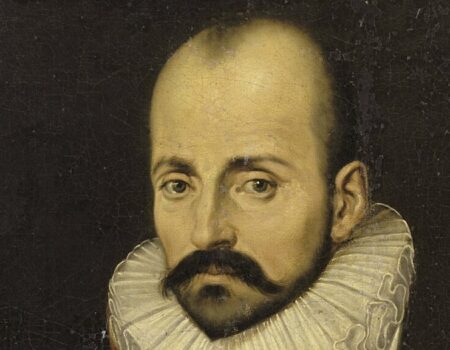
Taken from Obras Completas de Alfosno Reyes, Volumen XI, Letras Mexicanas, Fondo de Cultura Económica, México D.F 1960, page 103. Watercolour portrait of Paul Valéry by Alesandro Lonatti.
Transcription by Isabel de Bussy, translation by Perro Negro

Other Articles

El silencio de Leticia
Crónicas de M XI: Jueves Santo



No Comment! Be the first one.