

By Dr Marcela Ondekova
Marginalised neighbourhoods exist in all Latin American metropolises, yet there is no consensus on what to call them: in Venezuela, they are known as ‘ranchos,’ while in Colombia they are ‘tugurios,’ and in Argentina, ‘villa miseria.’ In Peru, they are referred to as ‘pueblo joven,’ ‘cantegril’ in Uruguay and everyone knows what a ‘favela’ is. This report from the Venezuelan capital by a Slovak-born expert in democratic governance tells us of varied, vibrant and colourful ‘rancho’ at the eastern edge of the capital’s metropolitan area
When I first heard about Petare, a neighborhood in the eastern part of Venezuela’s capital, Caracas, I was afraid for my safety. Its narrow alleyways lined with low-rise houses resemble Brazilian favelas, and its residents were once loyal voters of Hugo Chávez and later his political heir, Nicolás Maduro. However, my tour guide assured me that the neighborhood was well worth a visit—and not just its historical quarter.
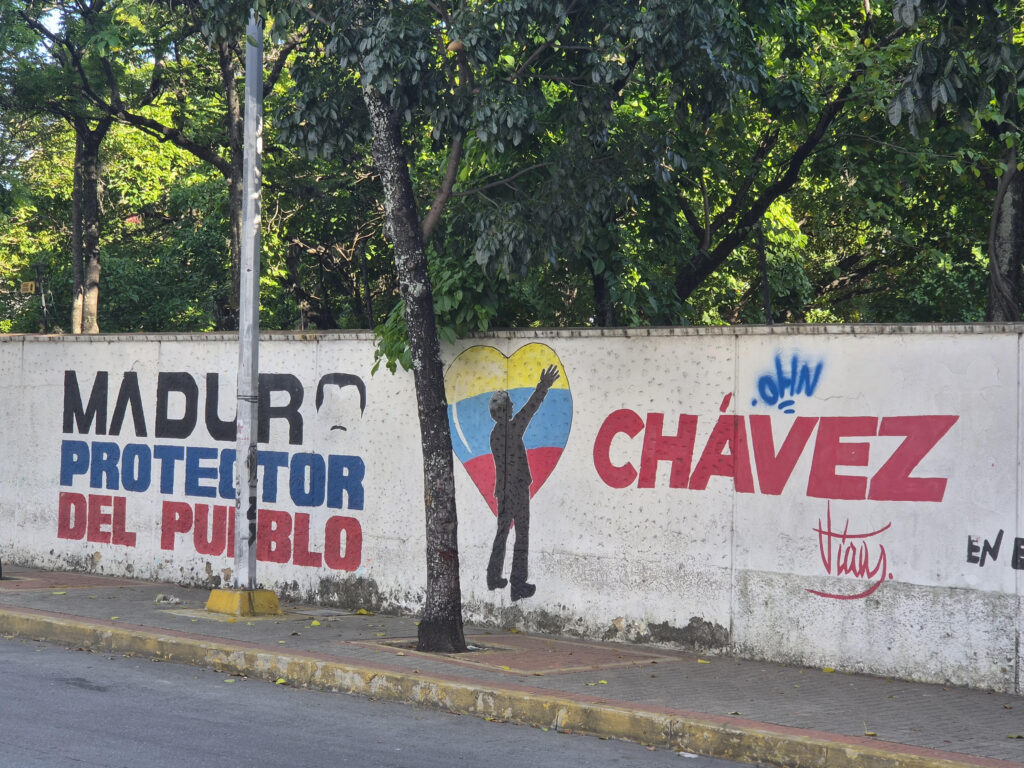
Following Maduro’s abduction by the United States earlier this year, the country was left in political uncertainty, which was further deepened by the June earthquakes that struck northern Venezuela and the capital itself. Caracas is a modern, bustling metropolis, but propaganda murals featuring Maduro, Chávez, and Simón Bolívar—after whom the Venezuelan currency, the bolívar, is named—remain a common sight on the streets.
The bolívar itself reflects the ubiquitous uncertainty—when paying, locals advise me to use a credit card or US dollars instead. The local currency is subject to massive inflation and no one wants a bank account in bolívares, as my guide explains over a morning coffee before we begin our journey through Petare.
Caribbean Urbanism
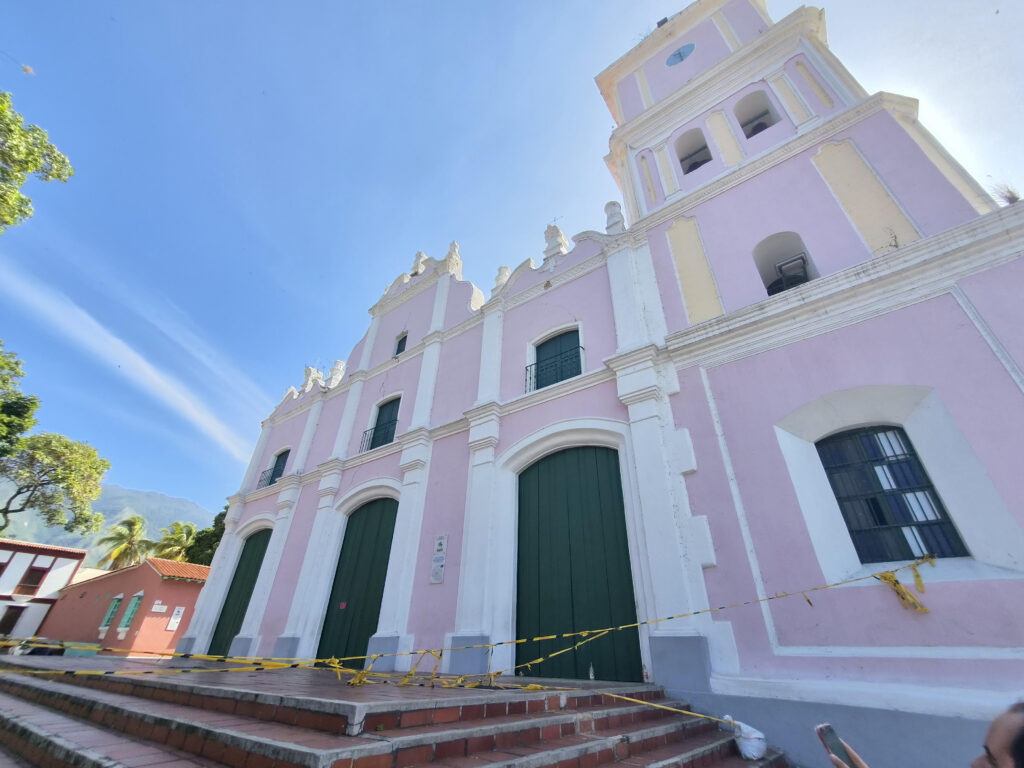
In the Caribbean dialect, Petare means “on the riverbank,” referring to the nearby Guaire River. The neighborhood’s origins trace back to the 17th century, and its “historical” core essentially consists of a few Spanish colonial buildings clustered around a typical plaza, an administrative building and a church. Nearby, there is also a folk theater, a museum of folk art housed in colonial-era architecture, and a few smaller churches. Many of these buildings feature courtyards offering a pleasant shade.
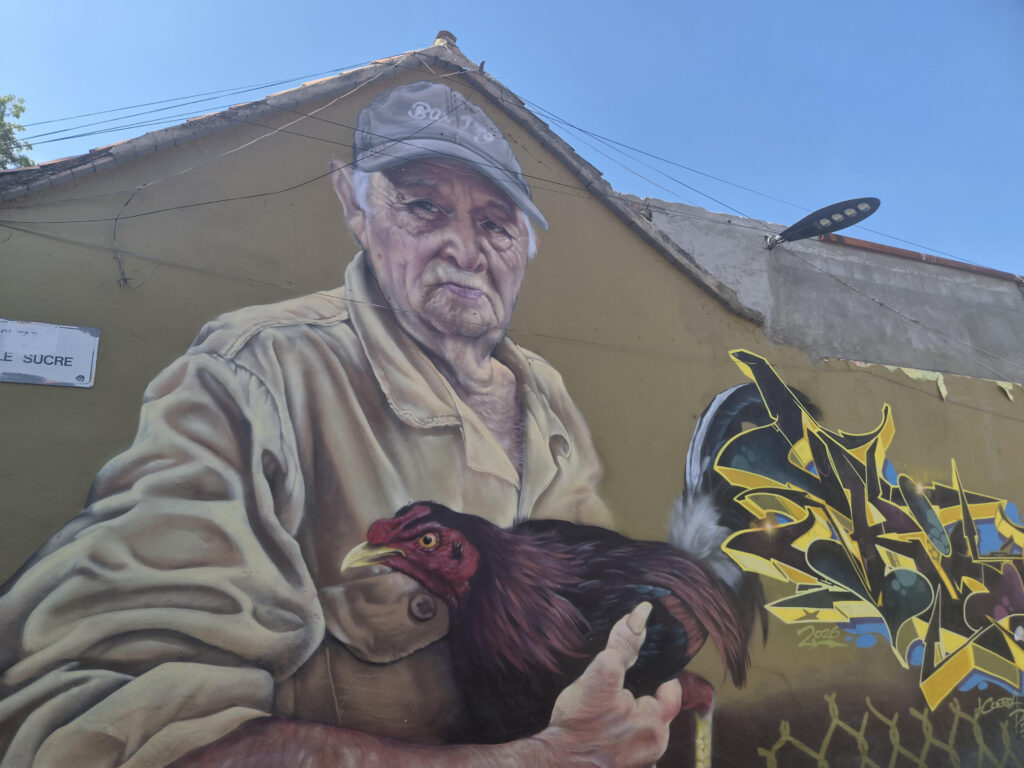
Plaza Sucre is the finest example of preserved colonial architecture, even though the colorful facades do not match the historical colors of the era, reflecting instead a lively Caribbean temperament. I personally love this character, even if historians fighting to preserve Venezuela’s cultural heritage often get frustrated with the locals for their violations of historical authenticity.
When the State Doesn’t Help
Petare’s population is comparable to that of Bratislava, and it is considered the largest urban neighborhood not only in Caracas, but in all of Venezuela. It is not a homogeneous district, but rather a tapestry of several working-class neighborhoods—the area with colonial architecture is only a tiny fraction of this diverse and dynamic locality. The historical center was declared a national cultural monument in the 1960s, yet socialist governments invested very little in preserving it. Even today, restoration efforts are mostly funded through private donations.
The June earthquakes damaged some buildings in Petare as well, but humanitarian aid has been concentrated along the coast north of Caracas. A church organization conducts repair work using funds raised from hosting community breakfasts in a parochial garden. Private companies with ties to the neighborhood also contribute funds to preserve these cultural landmarks.
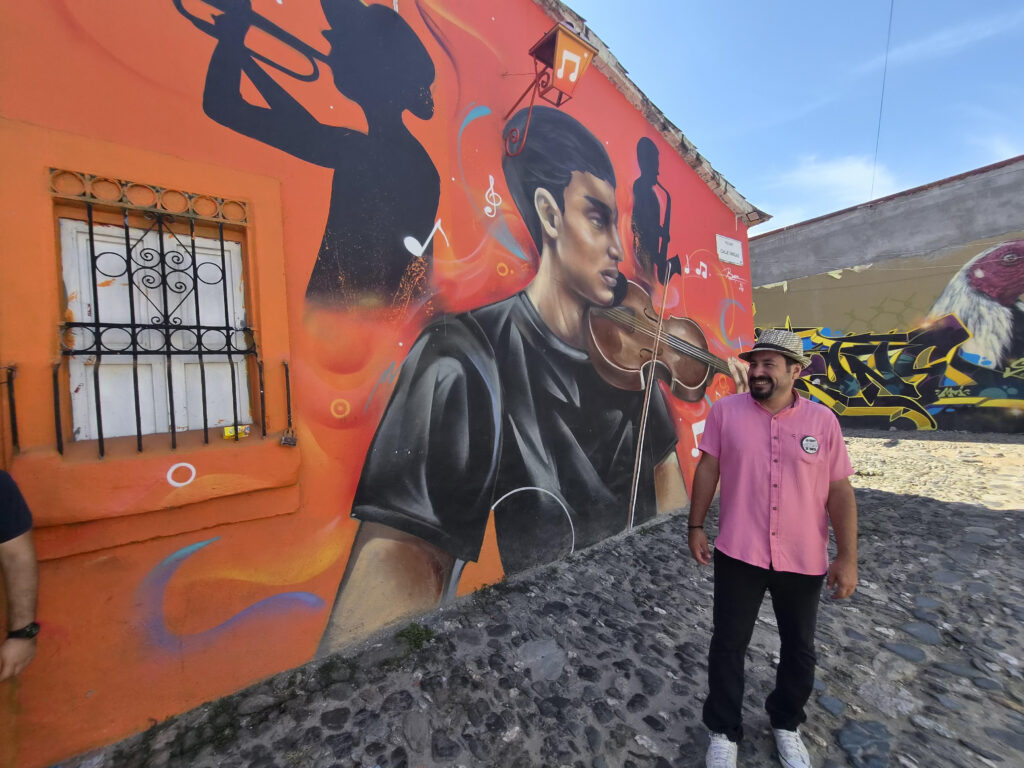
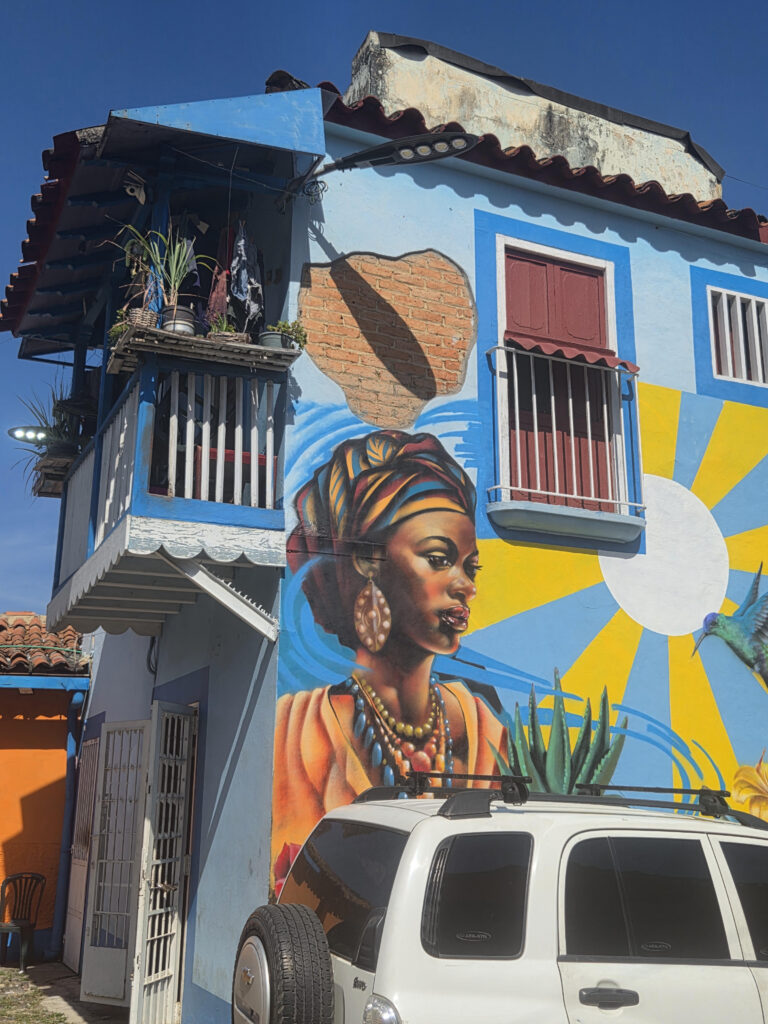
The popularity of the colonial quarter among visitors has also been boosted by “Ciudad Mural” (Mural City), a new initiative aimed at bringing beauty to neglected parts of the city. The project collaborates with numerous local artists, and the results of their work in Petare are truly remarkable.
Yet, you won’t find any souvenir shops here. Inside the Bigott foundation, a Venezuelan tobacco producer that sponsors local cultural activities, there is a workshop where cedarwood musical instruments are handcrafted—though these are sold directly to musicians. Near the square are a few small restaurants and cafes. My morning black coffee at one of them cost a single dollar. In the area where I live, I normally pay four times as much.
Life Among Sevillian Tiles
The César Rengifu Theater was not damaged by the earthquake, but it is undergoing extensive renovation. Its performances used to be hugely popular in the neighborhood. According to locals, theater in Caracas is not an elitist affair; performances are frequently held outdoors and are often free of charge. My guide happens to know the theater’s security guard, who lets us sneak a glance inside. Repairs are progressing slowly because costs are exorbitant, and both the dire economic situation and the recent earthquake have diverted funds to other priorities. My own daily budget is largely eaten up by basic living expenses—last week I paid eight dollars for butter, and like all my coworkers, I bring my own lunch to work in Tupperware.
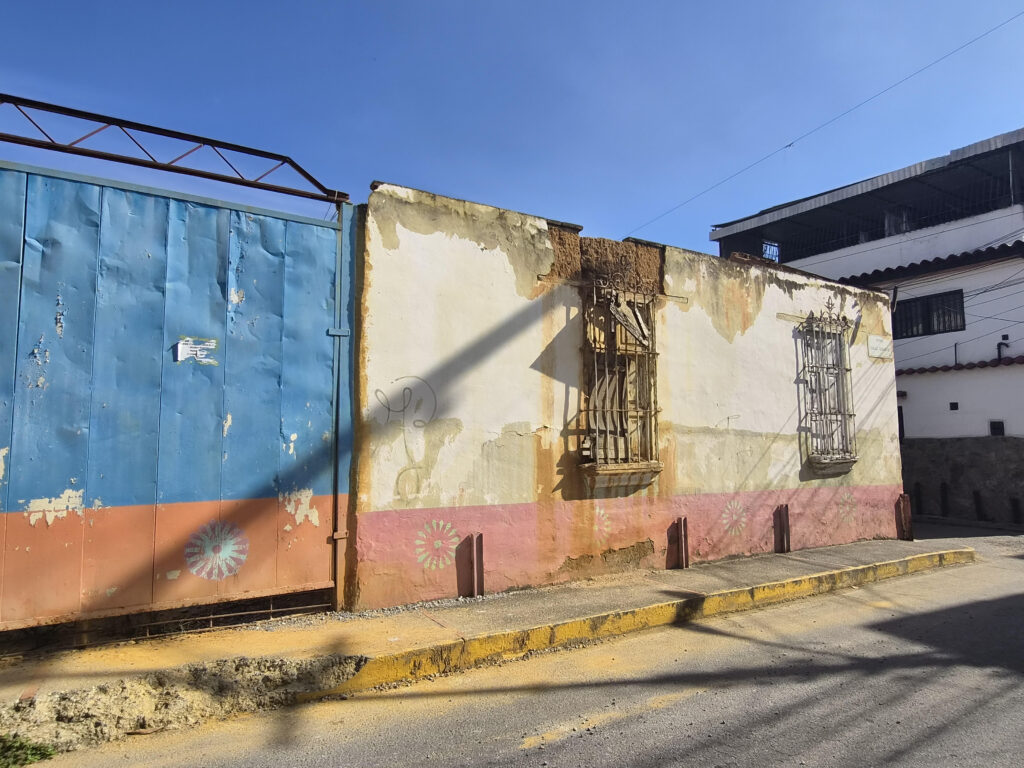
A lack of funding means that some historic buildings in Petare have fallen into disrepair, while others have been preserved without their original architectural features, stripping away their historical value. Beyond earthquakes, heavy rains common in this Caribbean country also erode the structures. Without professional intervention, these buildings stand little chance of survival. This is evident even on the grounds of the public school atop a nearby hill, which doubles as the El Toboso Cultural Center. The land and buildings were donated to the state by the family of Venezuelan painter Tito Salas, whose will explicitly forbade the property from ever being sold into private hands. The grounds house rare 17th-century artifacts, including ceramic tiles imported directly from Seville. I ponder for a moment whether it is appropriate to leave such splendor at the mercy of teenagers, but that is precisely what I love about Petare.
Hope for Change
The stories of this place weave together just like Petare’s winding streets. Girls practice modern dance beneath a historic balustrade. In the small park in front of town hall, Spanish monks once strolled, followed later by revolutionaries, and now graffiti artists. I view all of Venezuela in much the same way. It feels as though the era of Chávez and Maduro is slowly fading, even if it still retains die-hard supporters here in Petare’s working-class neighborhoods. As my guide puts it, some people will keep cheering for their team even when it loses one match after another. According to my acquaintances, the government of President Delcy Rodríguez, installed by the US administration, is merely a temporary phase that will pass. Sooner or later, Venezuelans will want a legitimate government and free elections—though for that to happen, political conditions in the United States will first have to shift.
A female colleague of mine who lives in Petare with her family wouldn’t trade this neighborhood for a more affluent residential area. Streets in the heart of Petare are vibrant and busy even on Saturday mornings, and a green traffic light doesn’t always guarantee you’ll safely cross to the other side. Yet residents here have found not only everyday services within walking distance (long before we started talking about the “15-minute city” back home), but above all, a genuine neighborhood spirit.
I find Venezuelans to be warm and friendly everywhere, but here in Petare, the sense of community cohesion is even stronger. Locals stop by to chat with us, adding their own anecdotes to the guide’s commentary. I was amused when someone shared that during the pandemic, someone came up with the idea to put a face mask on the giant statue of Christ at the entrance to the neighborhood. Muy chévere.
Not an Open-Air Museum, but a True Home
This neighborhood thrives because it isn’t frequented solely by tourists. It is a living community with schools, hospitals, local bakeries, and small businesses. Yes, it desperately needs more funding for cultural restoration and to fix the precarious electrical wiring overhead, but it doesn’t need to become a viral “cool” spot where tourism eventually displaces the locals.
Cultural heritage is not just about historic walls or ancient artifacts; it is about the people and the atmosphere they create day in and day out. The worst thing that could happen to this neighborhood would be commercialized mass tourism or gentrifcation. Petare is beautiful just the way it is.
Dr Marcela Ondekova is a Slovak-born expert in democratic governance and women’s rights. She has spent over 20 years working internationally in Asia, the Middle East, and Africa, including in conflict zones. Her current work focuses on building civic initiatives and partnerships with municipalities in Slovakia, as well as advancing women’s political participation. She is an alumni of the London School of Economics and Cork University Business School.
All images by Dr Marcela Ondekova

Other Articles
Civismo y barbarie



No Comment! Be the first one.